
A dedicated Friend of the Presumpscot River
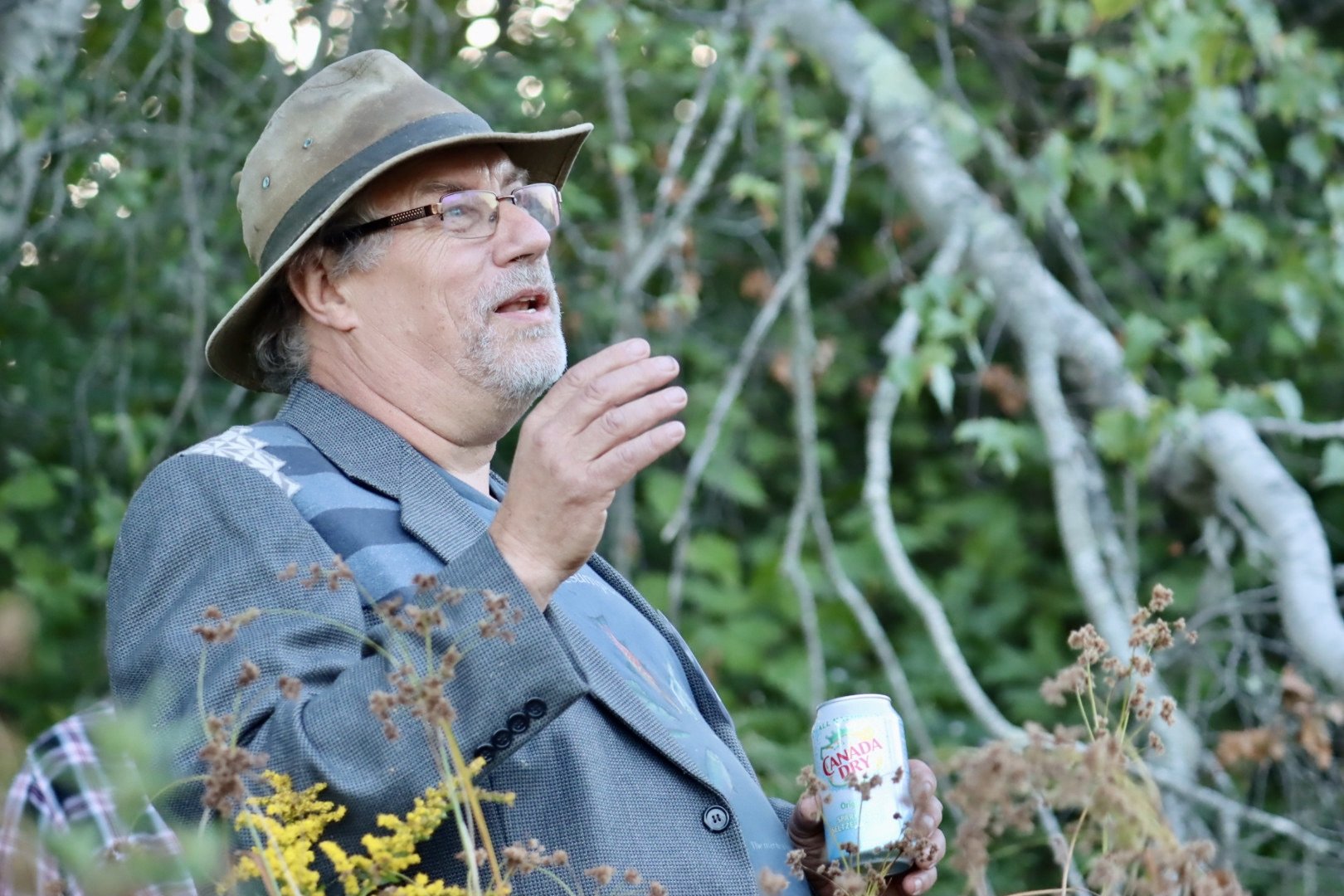
PHOTO: FOLLOW JOY PHOTOGRAPHY, JEN DERASPE
By Amy Paradysz
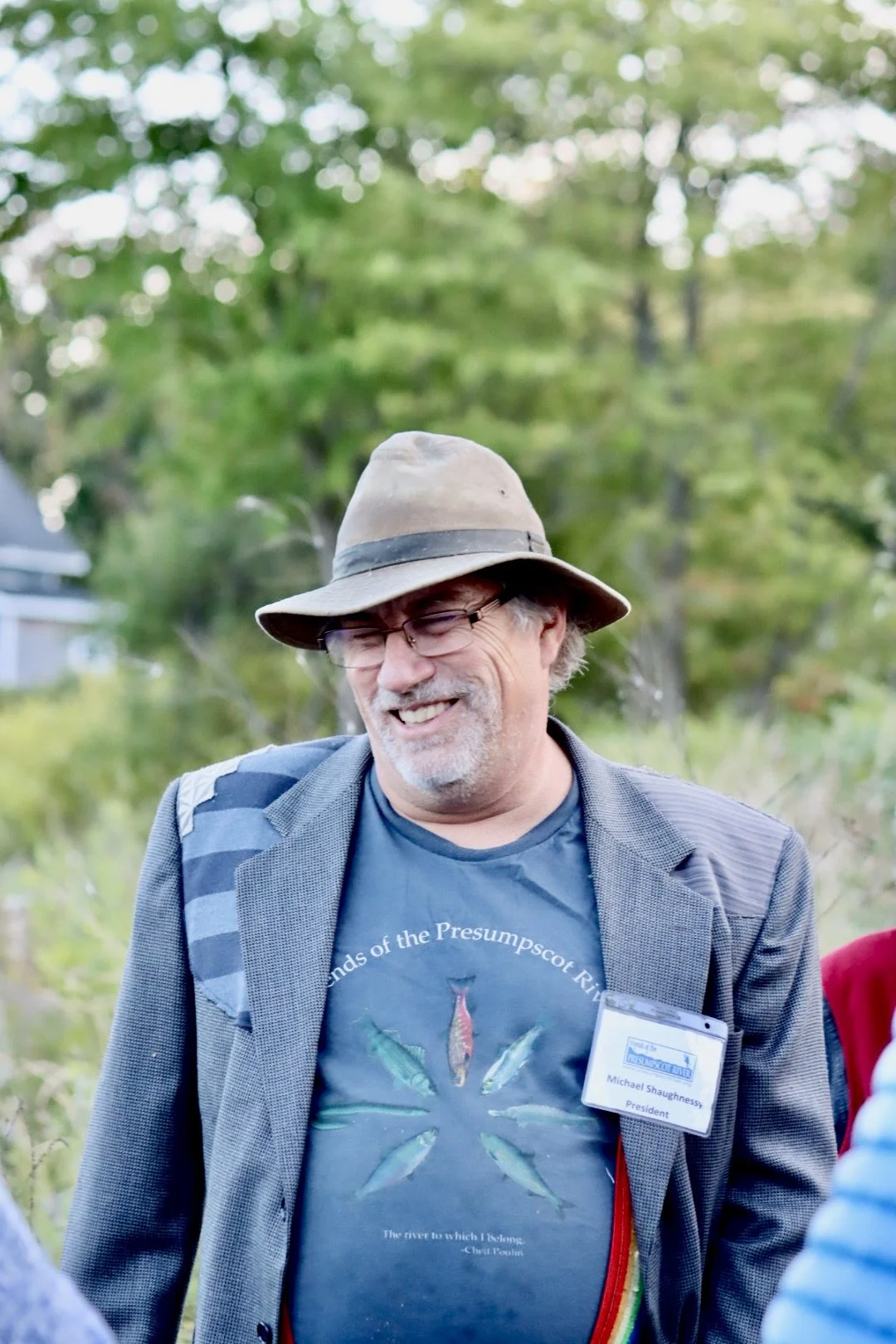
PHOTO: FOLLOW JOY PHOTOGRAPHY, JEN DERASPE
For Michael Shaughnessy, the Presumpscot River was love at first sight.
For the past 15 years, Shaughnessy has led the nonprofit Friends of the Presumpscot River in advocating for river conservation. But in 1987, he had just moved from Kansas City with his young family to teach art at the University of Southern Maine. In their new hometown of Gorham, the Shaughnessy family paddled less than a half mile and found a swimming hole with a waterfall.
“We imprinted on the Presumpscot River very quickly,” he says, adding that the family now lives further downriver within earshot of Westbrook’s Saccarappa Falls.
Of course, as Shaughnessy points out, none of us have seen the Presumpscot in its truly natural state. It would have been wild! With a 250 foot-drop in elevation over 27 miles from Sebago Lake to Casco Bay, waterfalls abounded. In fact, the Abenaki gave this powerful river its name, which translates to “many rough places.”
Those “rough places” have been used to generate industrial power since the early 1700s when Colonel Thomas Westbrook oversaw the logging and production of masts for the Royal Navy. By 1736, the river was so dammed up that Abenaki Chief Polin walked to Boston to plead with the Governor of Massachusetts to let the fish pass. Twice. But his plea fell on deaf ears.
Over the next 250-some-odd years, settlers took over Abenaki lands. Mills continued to pop up along the Presumpscot, and communities grew up around them, including the city named after Colonel Westbrook that now boasts a population of over 20,000.
Colonel Westbrook wouldn’t have recognized what the Presumpscot has become: its wildness is now tamed to a series of nine impoundments— not quite river, not quite lake—between dams. In the 1930s, the Corps of Engineers categorized the Presumpscot as the most dammed river in the country. Later decades saw riverfront property being zoned for industrial purposes in many areas.
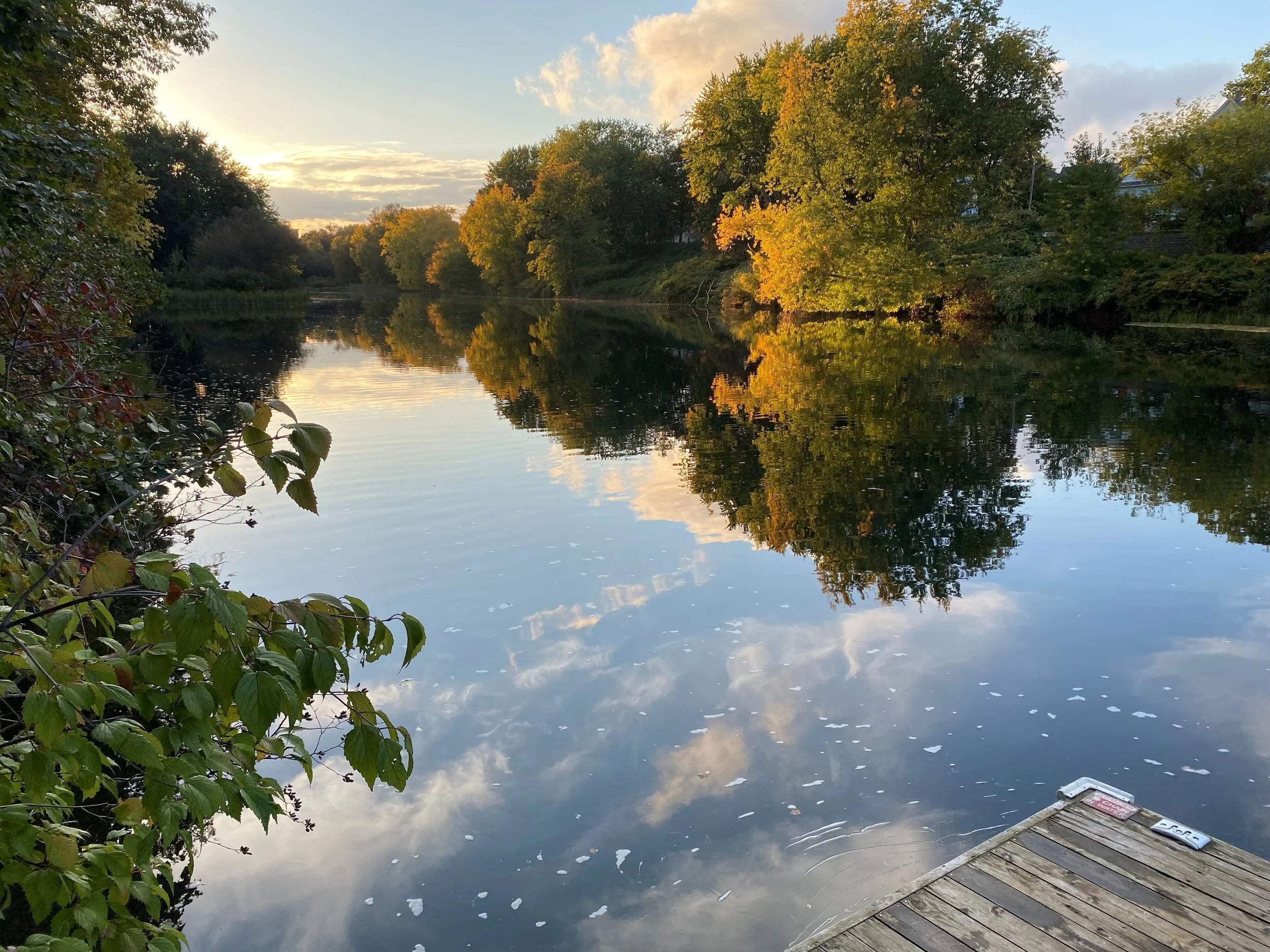
The rebirth of the Presumpscot is part of the rebirth of Westbrook. PHOTO: HEATHER CHANDLER
To put it frankly, the Presumpscot wasn’t at its best in the ’80s when Shaughnessy and his family chanced upon those beloved waterfalls.
In 1991, a proposal came before the Town of Windham to create a deinking plant along the river. The idea was to recycle pulp, but the plant would need to discharge 800,000 gallons of warm effluent each day.
“There were concerns among locals that this would change the water quality, and some of us called ourselves the Friends of the Presumpscot River,” says Will Plumley of Windham.
The Friends—which initially included Plumley, Shaughnessy, Sandy Court and Dusti Faucher—incorporated as a nonprofit in 1992. They knocked on a lot of doors and were victorious when Windham voters shut down the proposal so decisively that the pulping company didn’t bother trying again.
“This one act was the beginning of the revival of the river,” Shaughnessy says.
But one battle doesn’t win a war.
In 1997, five of the dams were being relicensed and the Friends fought to have three dams removed and fish passage created at two. A federal energy regulation commission ruled in favor of fish passage at all of the dams, though none of them were required to be removed. This was still progress, and it set the direction of the Friends group for many years: one incremental victory after another.
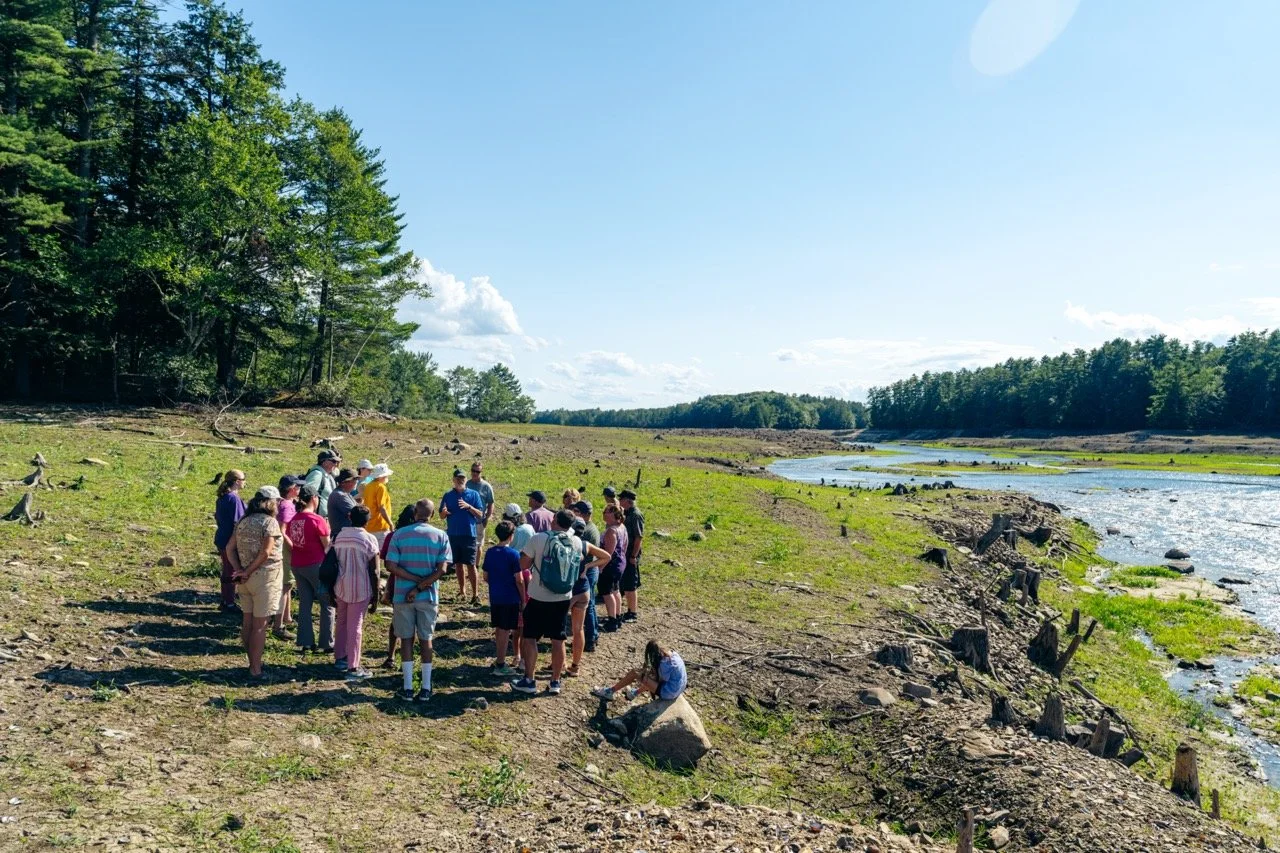
Michael Shaughnessy giving a Friends of the Presumpscot tour in the summer of 2024. PHOTO: CHRISTOPHER SHANE
“The amazing results that we are seeing with the rebirth of the Presumpscot River are because of years of persistence and fortitude on behalf of the Friends of the Presumpscot River,” says Maine Rivers Executive Director Landis Hudson. “They have done a lot of work to improve the health of the river and weigh in on often complicated procedural and administrative processes, of which there are many. And the rebirth of the Presumpscot is part of the rebirth of Westbrook. I think the City of Westbrook realizes that this river that runs through it is an amenity that draws people in.”
Shaughnessy, who became president of the Friends group in 2010, is inspired by the historical record of Chief Polin saying he “belonged to” the Presumpscot River. Shaughnessy says, “That has been a bellwether for us, conceptually, that we all belong to the river and the river could be cared for much better.”
Legal and procedural battles have been fought by a relatively small group of changemakers working to remove dams along the river (seven remain today). But broader support will be needed to help return the river to a healthy, natural state that supports fish such as shad, herring and salmon.
During Shaughnessy’s tenure as executive director, the Friends have widened their outreach with a focus on schools, youth organizations and riverside neighborhoods where few people get out on the water.
“The more we can connect people to the river—through paddling, tours, hikes and river dipping, the more people will support, respect and advocate for the river,” he says.
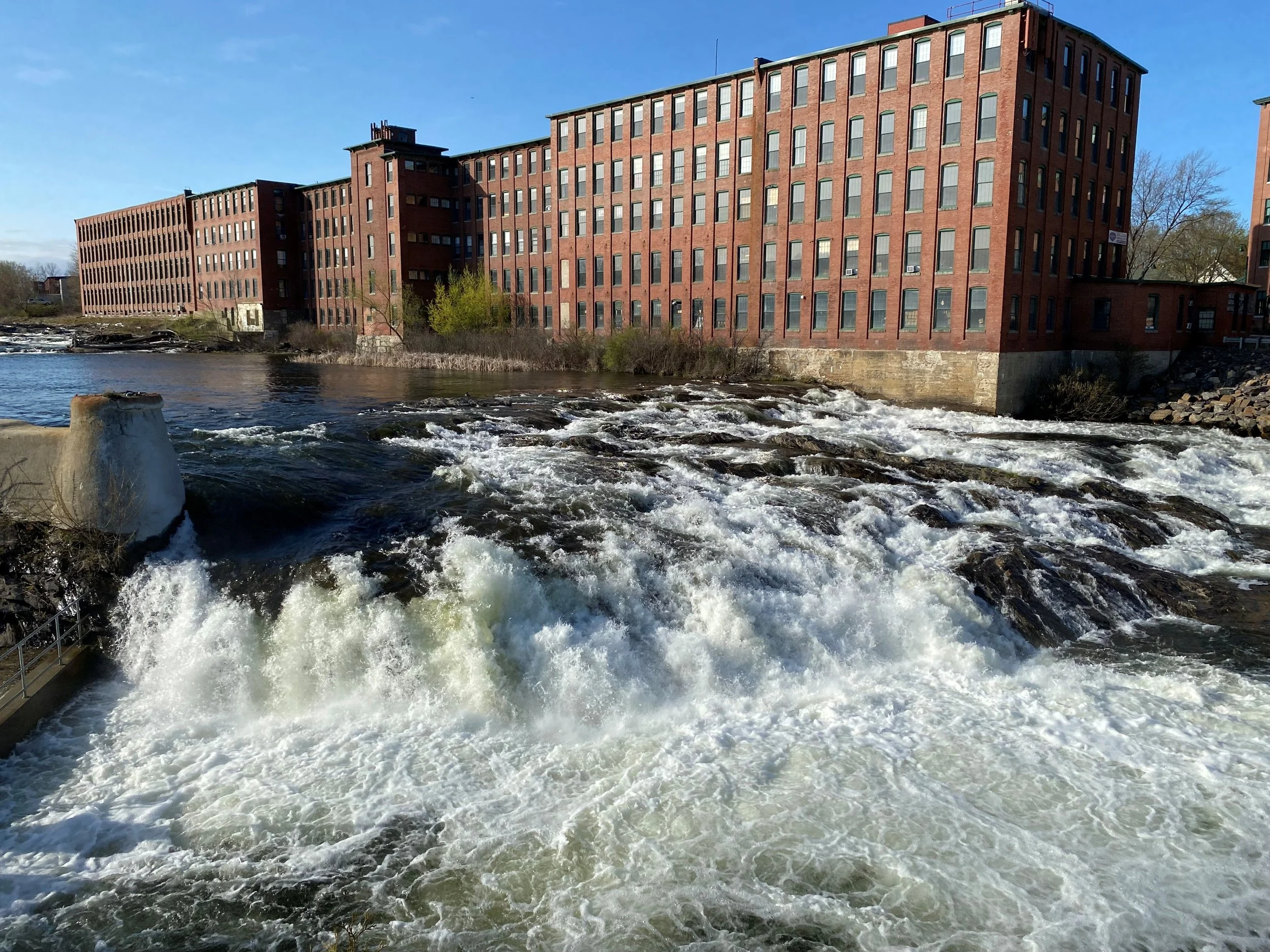
Saccarappa Falls and the Dana Warp Mill, just upstream from Conant Homestead. PHOTO: HEATHER CHANDLER
After years of living along the Presumpscot in Windham (and serving on the Windham Town Council), Shaughnessy discovered the eighteenth-century Conant Homestead in Westbrook was on the market. “It was almost like the river gods pulled us to this house,” he says. “Friends of the Presumpscot River was in the middle of negotiations [about fish passage and dam removal] at Saccarappa Falls, and I can hear the falls from the back door of this house.”
The Shaughnessy family maintains the farm’s character with permaculture gardens, goats and chickens. They also host events such as conservation walks and a Friday night summer concert series. The Friends of the Presumpscot River have established a memorial to Chief Polin on the path from the Homestead to the Saccarappa Falls.
“Anything that brings people together and results in something good—that’s where you’ll find Michael,” Plumley says. “He’s a difference maker.”
Shaughnessy is also an entrepreneur who produces and markets artisanal vegan burgers called GráKakes (that he grills at the Friends’ Community Paddle & Grill outreach events). He serves on the Westbrook City Council. As an art professor, he enjoys connecting artists with community organizations, like USM Artist in Residence Ryan Adams and nonprofit Discover Downtown Westbrook, which is how the murals facing Saccarappa Falls came to be. And he was the volunteer art director for “River Voices: Perspectives on the Presumpscot,” the 2021 book Plumley co-wrote with USM environmental science professor Rob Sanford to celebrate the rebirth of the Presumpscot River.
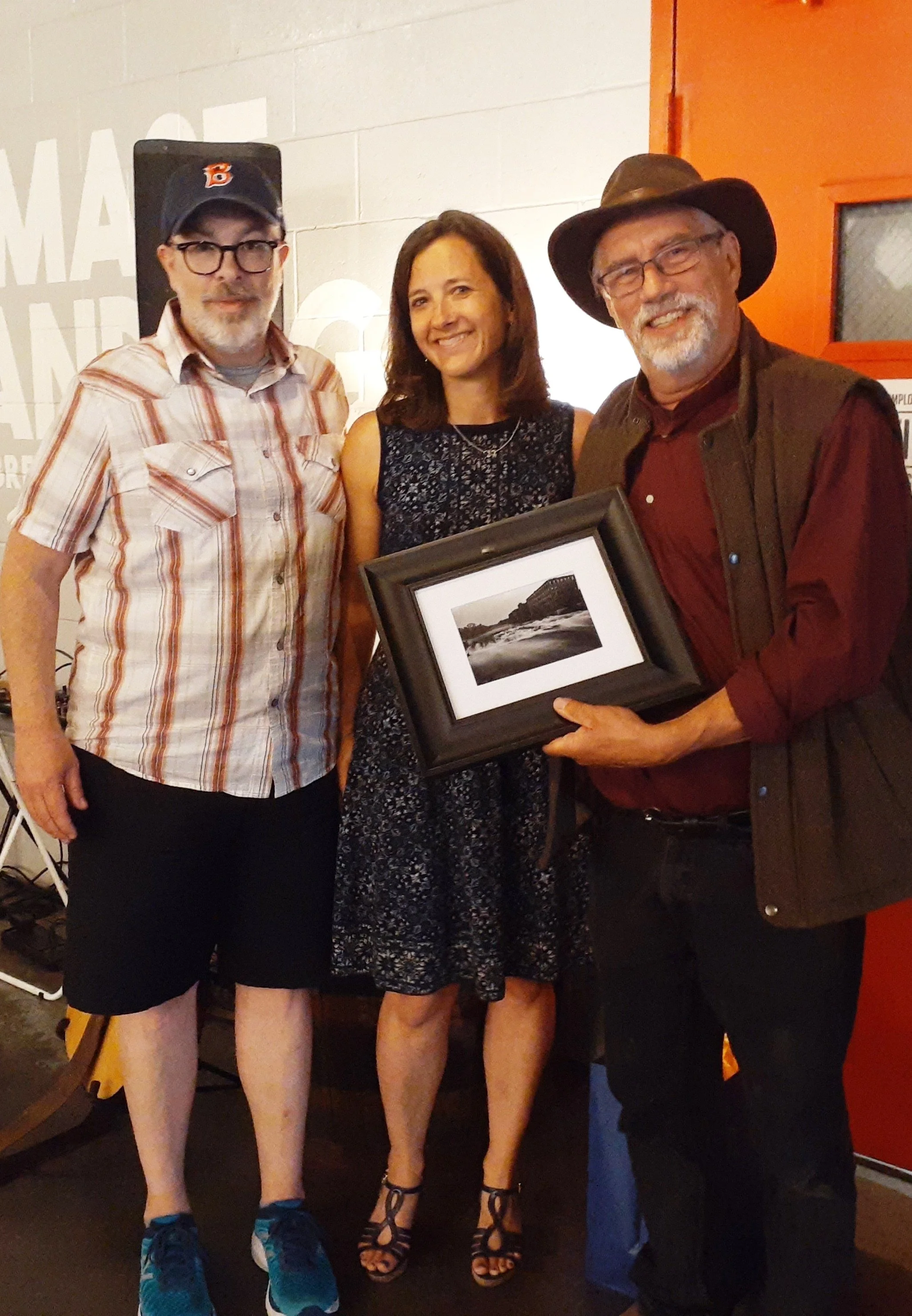
Cary Tyson, Discover Downtown Westbrook (DDW) Executive Director Amy Grommes Pulaski and outgoing DDW board member Michael Shaughnessy, who was presented with a photo of Saccarappa Falls. PHOTO: ABIGAIL WILSON
“What is remarkable to me,” Shaughnessy says, “is that it was so polluted that it was brown, filled with foam and toxic. As such, it was shunned, thus leaving long areas undeveloped. Now due to citizen activism and the Clean Water Act, the river has made a major comeback. The challenge is to keep the water quality high and allow it to heal as development pressures grow. It has come a very long way but it has a long way to go.”
Amy Grommes Pulaski, executive director of Discover Downtown Westbrook, says, “The reason that the river is now clean is because people cared to make it better, and that was instituted through the Friends of the Presumpscot River. Michael was one of those key people. Without his foresight, vision and tenacity, the river wouldn’t be what it is today.”
Shaughnessy has a reputation for being “anti-dam.” But the truth is more nuanced.
“We don’t need [hydro] power in the same way we did before,” he says. “I’m not saying that we should necessarily remove every dam. But our need for wildness is far greater than the meager amount of power that this river produces. We have for so long known this river as long flat stretches that are impoundments that we have ceased to realize what the river is. And then last summer came along.”
In June 2024, the owners of the dams had to lower Dundee Dam’s water level. To do that, they had to raise gates, which is like pulling the plug on a bathtub and putting the plug back in quickly before the tub completely drains. Well, the gates wouldn’t close and the entire Dundee Pond drained. Fish swam down to the next impoundment, and mussels died.
But the historic Whitneys Falls and the Island Falls reemerged, and a section of “braided” river emerged.
“It was like the river had been hibernating for more than a century,” Shaughnessy says. “The ground was clay and topsoil, and it started to green in almost immediately. I asked environmental scientist Karen Wilson at the university how the seeds got down there, and she said the plants were dormant all this time!”
Whitewater kayakers and fly-fishers were in their glory. People were taking dips in the waterfalls. Mountain bikers could ride along the tow path of the canal and see an exposed section of the old Cumberland & Oxford canal and wood cribbing and stone foundations of old farmhouse outbuildings.
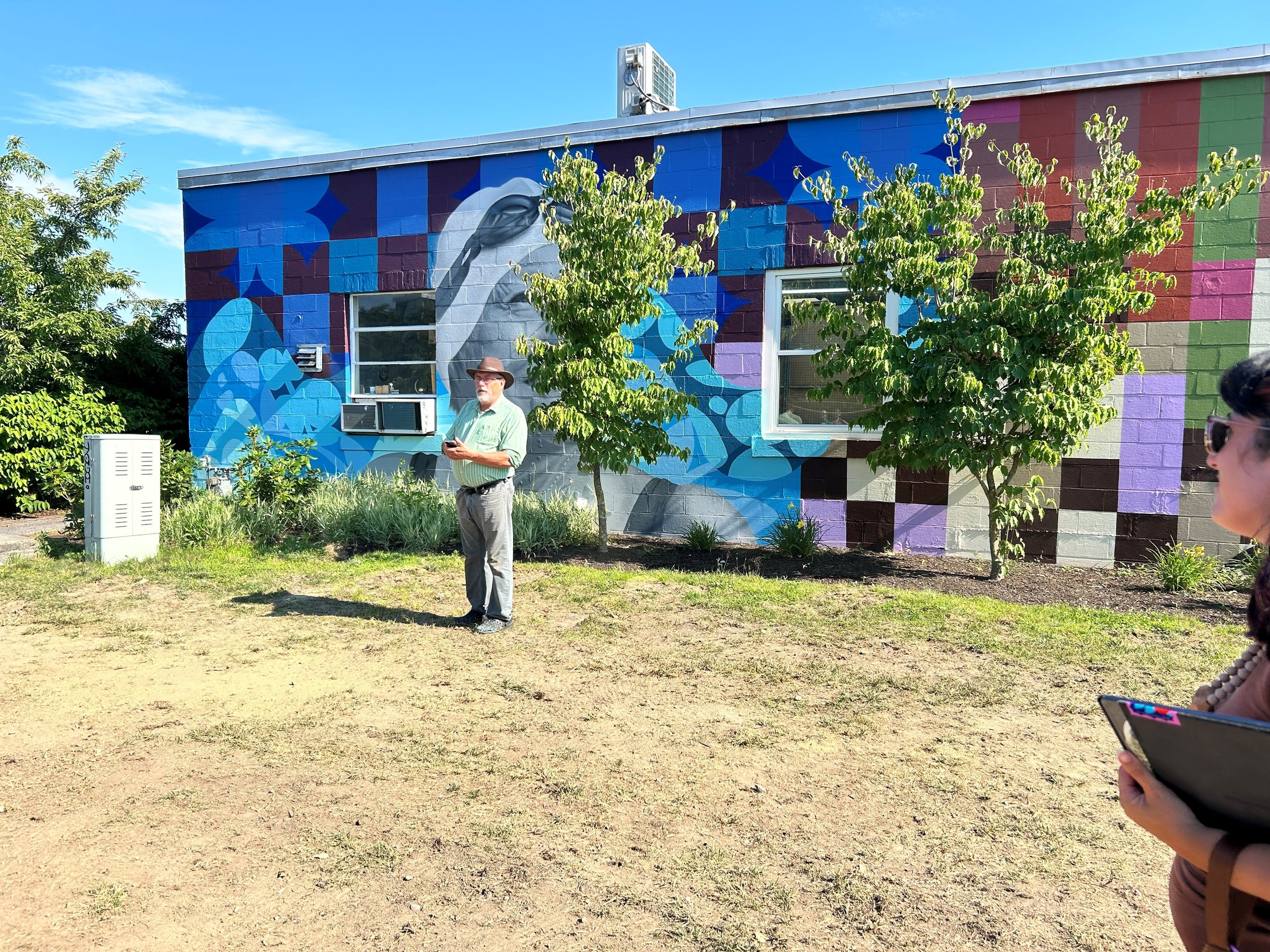
Michael Shaughnessy at murals along the Westbrook RiverWalk. PHOTO: COURTESY OF DISCOVER DOWNTOWN WESTBROOK
Documentary filmmaker Christopher Shane is working with the Friends group on a film about the unexpected draining of that impoundment and how the river—and the community—reacted.
Shaughnessy says, “I always knew that what we were looking at wasn’t the ‘real’ river, but I’d never seen it so fully on display.”
This was another subtle shift in philosophy for the Friends.
“As an organization, we realized that it is not only about removing dams; it’s about freeing a river,” Shaughnessy says. “I look at this river not for what it always has been in our lifetime but for what it was originally and what it can be.”
Whatever the river could be, it’s clear that it wouldn’t be what it is today without Shaughnessy and the Friends of the Presumpscot River.
Spotlight on Maine’s Environmental Changemakers




For the past 15 years, Shaughnessy has led the nonprofit Friends of the Presumpscot River in advocating for river conservation.