Six Maine companies making an outsized impact
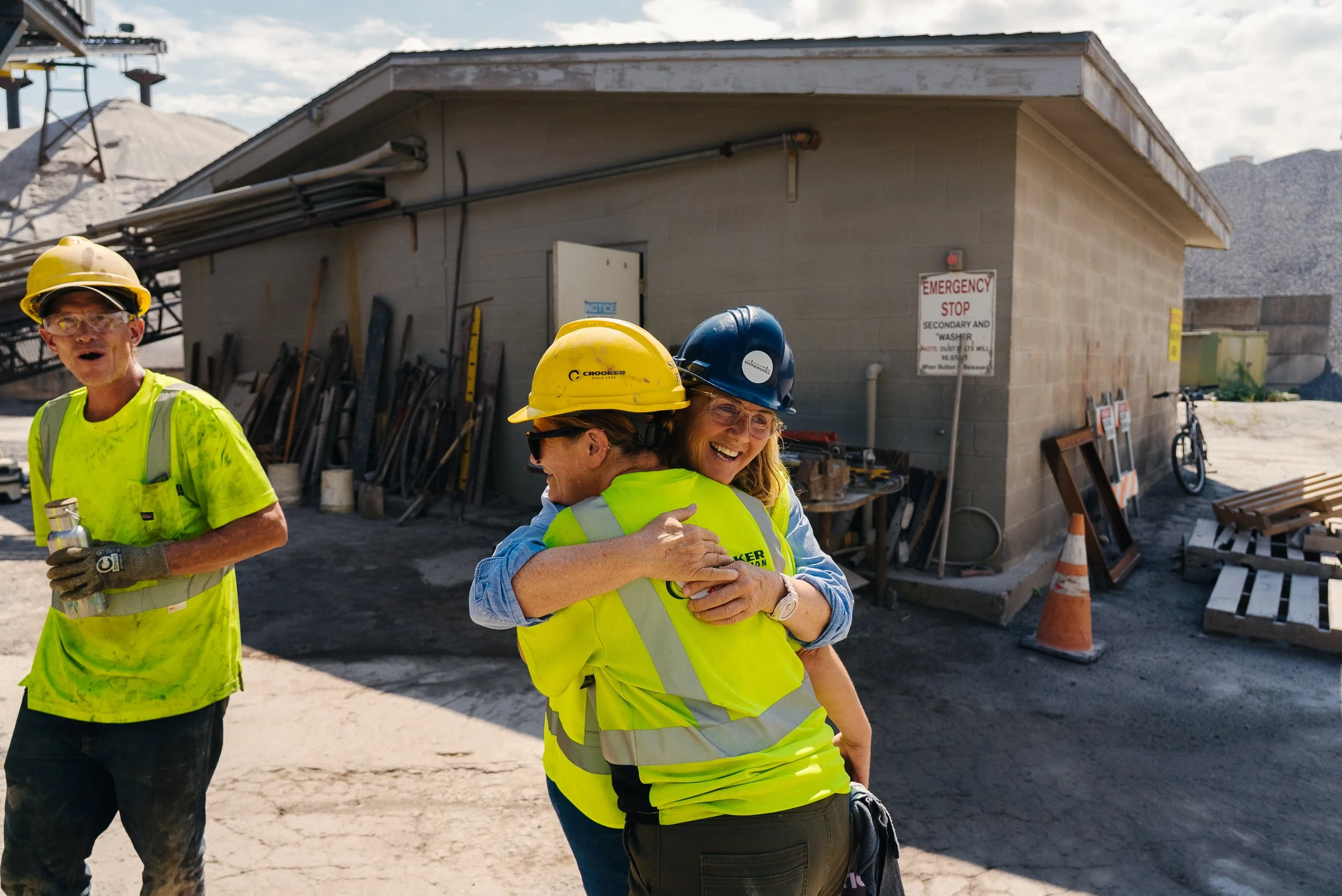
Margo Walsh (in the blue hardhat) founded MaineWorks to give people with a history of incarceration the opportunity to work. PHOTO: NICK TENNEY
By Amy Paradysz
Ever notice that some of Maine’s strongest forces for environmental and social change, working alongside nonprofits and community organizations, are actually for-profit businesses?
A noteworthy number of small Maine companies (and their customers) are positively impacting communities in a variety of ways: Composting millions of pounds of food waste. Preventing the use of 368,000 plastic containers. Printing uplifting messages on shirts to spark conversations about mental health. Hosting events for cultural communities, artists and authors at a commercial coffee roastery. Redesigning websites for nonprofits. And giving second chances to thousands of people with a history of substance use and incarceration.
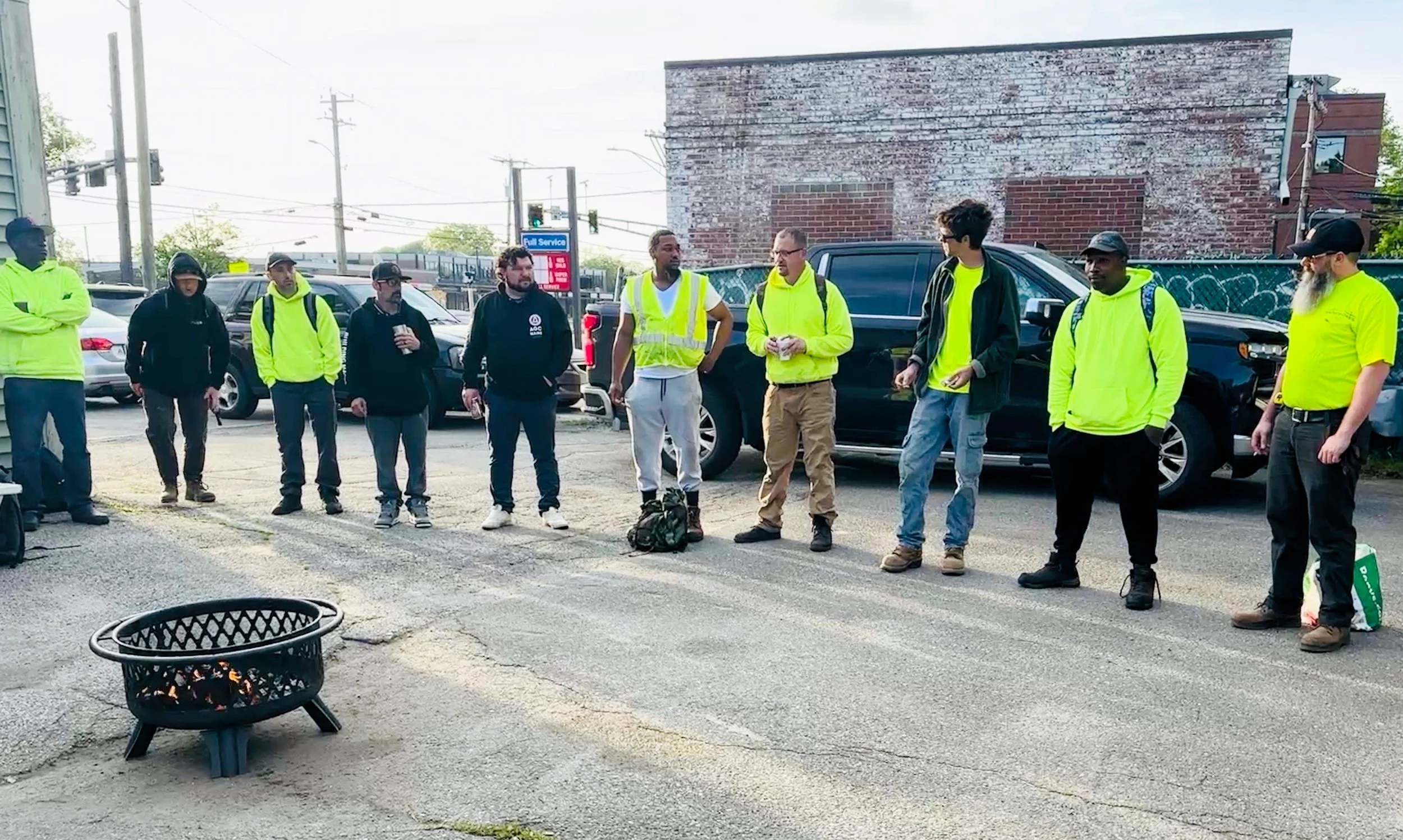
MaineWorks employees gather in Portland early on Friday mornings for a fire circle that builds a sense of community and connects them with resources. PHOTO: MARGO WALSH
MaineWorks founder Margo Walsh remembers some raised eyebrows when she first told the City of Portland she wanted to start a company to hire only convicted felons. “Almost 100% of my employees have struggled with drugs and alcohol, and I saw a business opportunity to make a difference in their lives,” Walsh says.
MaineWorks was founded in 2011 when Walsh, early in her own recovery, was volunteering at the county jail and noticed that no one was getting hired when they got out. The company—which became Maine’s first B Corp entity in 2013—offers immediate employment in industrial construction, from demolition to landscaping. In 2017, Walsh and her sister Elaine Walsh Carney founded MaineWorks’ nonprofit partner, United Recovery Fund, which covers housing, transportation and work gear. Early every Friday morning, MaineWorks employees gather for a fire circle that—much like a support group—builds camaraderie and connects people with resources they may need.
The results are impressive. Of the 2,500 people who have found employment through MaineWorks and continued beyond two weeks, 98% have stayed out of jail and 80% have not returned to drug use: all because Walsh identified a problem, envisioned the solution and staked her career on that conviction.
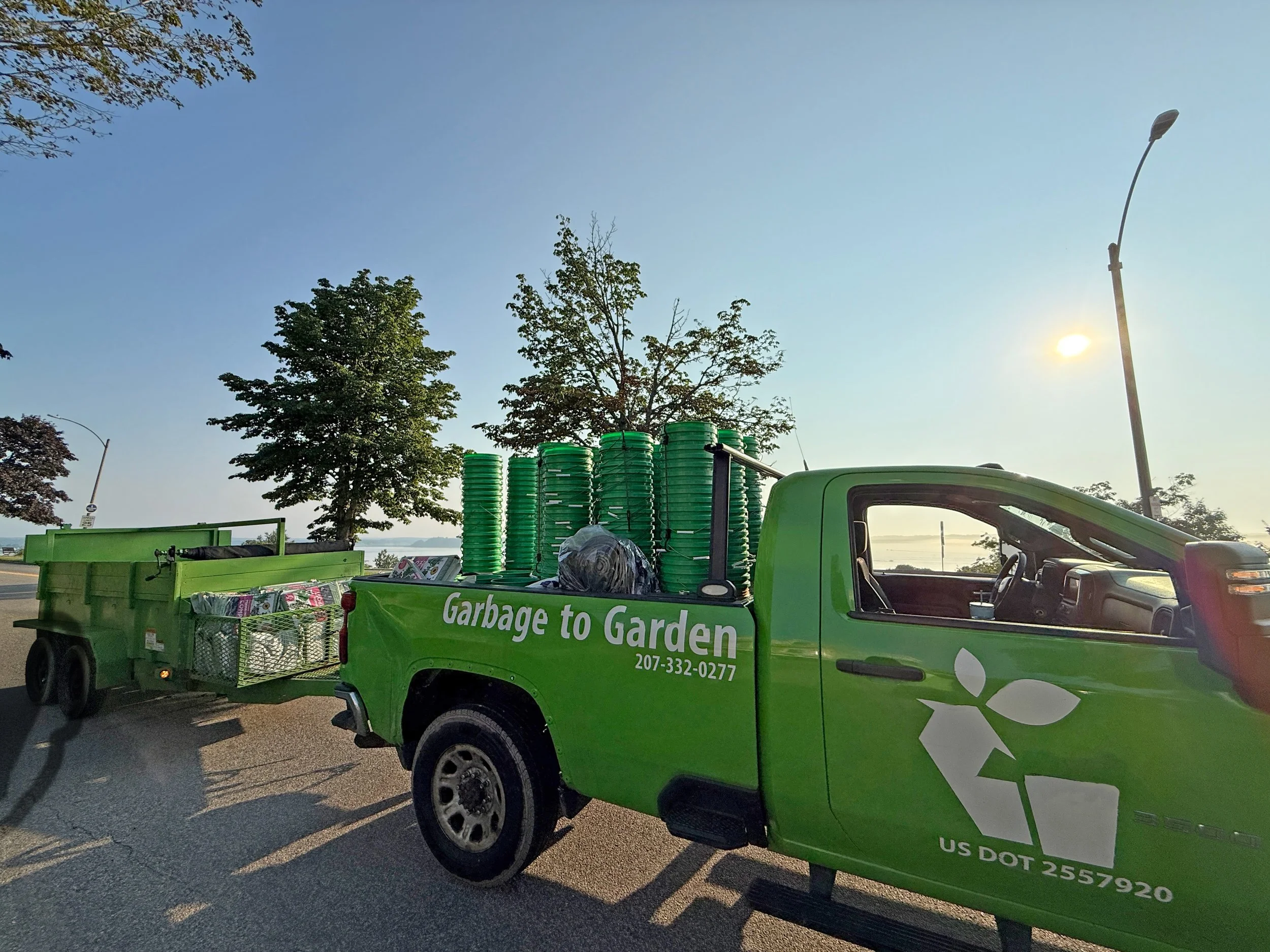
Garbage to Garden collects about 650 tons of compostable materials each month. PHOTO: CALLY ALTHOLTZ
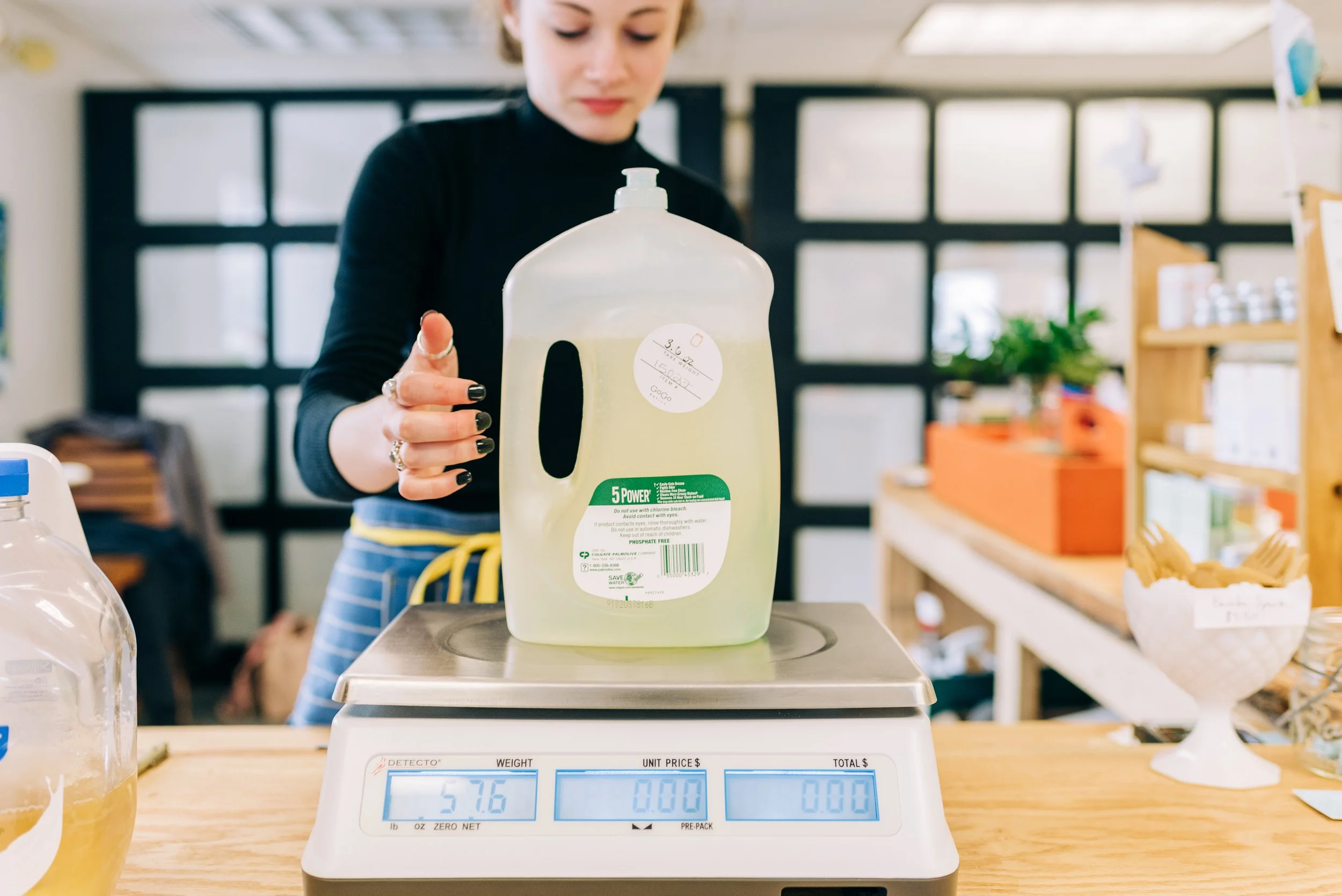
GoGo Refill customers have refilled their reusable containers hundreds of thousands of times. PHOTO: ELLE DARCY
Likewise, Tyler Frank of Garbage to Garden and Laura Marston of GoGo Refill founded their businesses to address the dismaying amount of plastic and food waste ending up in landfills and incinerators. Each of them saw the solution: Make it easy for people to do the right thing.
“We make composting so easy, accessible and rewarding that it becomes a way of life,” Frank says. “We give clean buckets back every week, and putting food waste in a sealed bucket isn’t any more gross than putting food waste in the trash. Some people say, ‘I would compost, but I don’t generate much.’ Well, nobody generates much. You don’t have to fill a bucket every week for it to matter. Most people don’t. And yet it adds up to hundreds of tons a month.”
Since 2012, Garbage to Garden has repurposed nearly 100 million pounds of food waste destined for landfills and incinerators in Maine and eastern Massachusetts.
The household service costs $19 a month (though some cities in Greater Boston have started picking up that tab) and includes a free bag of finished compost each week upon request during growing season (customers can request up to 12 weeks at a time). Garbage to Garden also supplies organic farms with nutrient-rich soil.
The composting startup has come a long way from the early days when Frank brought all the food scraps to his mom’s backyard in North Yarmouth. Today Garbage to Garden composts on an industrial scale in Auburn and makes premium organic-certified compost in Windham. Between households, commercial pickups and large events, Garbage to Garden collects about 650 tons of compostable materials each month.
“Our mission goes beyond composting to recycling, increasing awareness and helping facilitate a cultural shift,” Frank says. “We’re happy and proud to be part of the transformation we see toward a better understanding and appreciation for recycling and composting in our community.”
Likewise, GoGo Refill founder Laura Marston talks about helping facilitate a culture shift from recycling plastic to avoiding plastic.
“We are inundated by messaging of how enormous the climate crisis is,” she says. “But once you really start making small changes in your daily life, you see how much of a difference you can make in your own household and you want to do more.”
At GoGo Refill in South Portland, customers can buy everything from shampoo and conditioner to laundry detergent and all-purpose cleaner at a refill bar. Collectively, these patrons have avoided buying 368,000 plastic containers over the past six years.
“The market for products like we sell has grown so much because people want to shop sustainably and reduce their use of plastic,” Marston says. “They’re voting with their dollars.”
As a 1% for the Planet member, GoGo Refill “votes” for a more sustainable future by contributing 1% of monthly profits to environmental causes. And that resonates with their community.
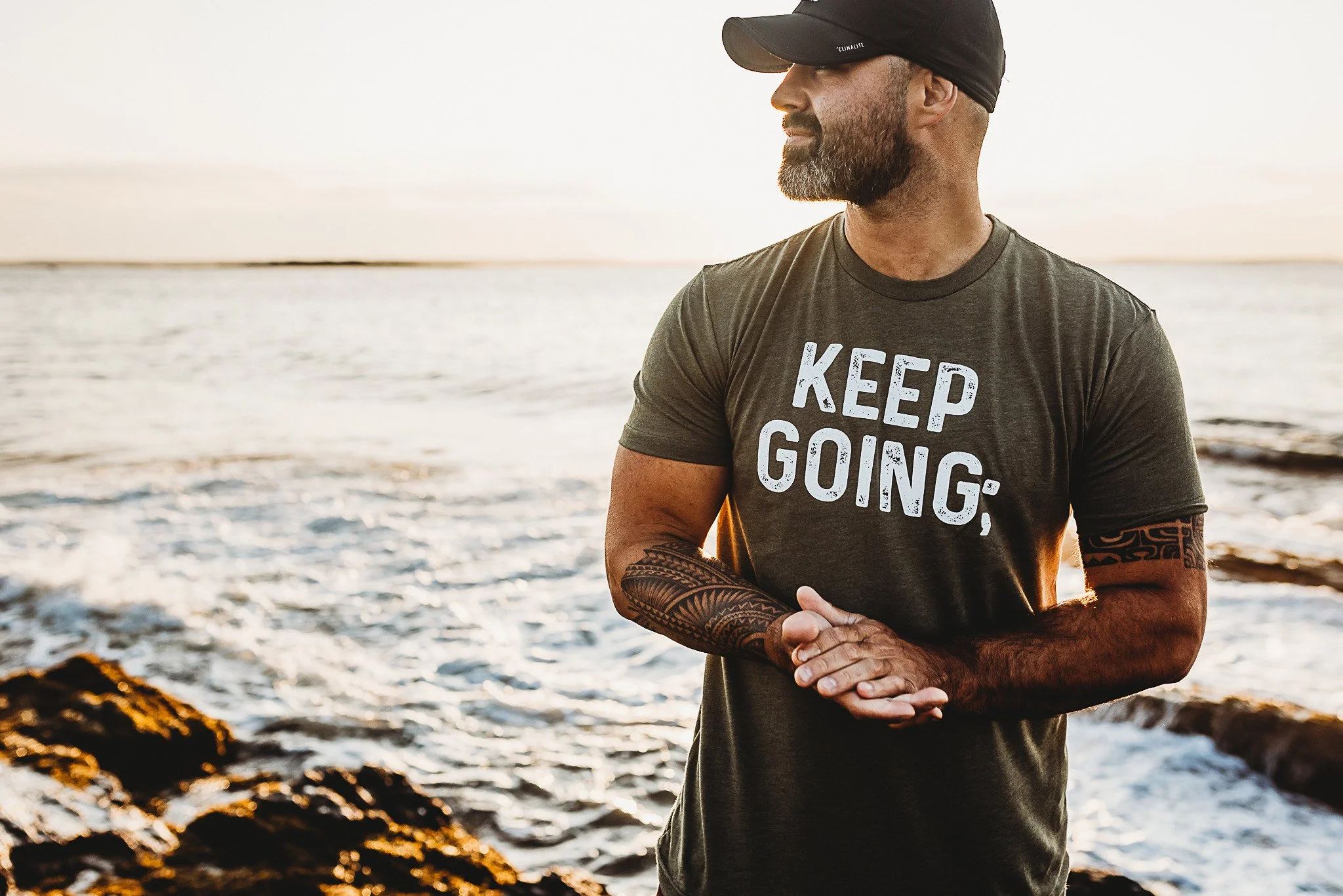
Catalyst for Change founder Kyle Poissonnier uses clothing to start conversations about mental health. PHOTO: REBECCA PINKHAM
Kyle Poissonnier, founder of Biddeford-based Catalyst for Change, found that resonance when in 2014 he produced a “very Maine” buffalo check hoodie and pledged to donate all the proceeds to a suicide prevention program that was run by the state.
“I had been in dark place, trying to figure out what to do next,” Poissonnier recalls. “In my depression and feelings of hopelessness, that first suicide awareness hoodie was a lightswitch moment. So many people want to talk about mental health, and clothing can start that conversation.”
Since then, Catalyst for Change has created merchandise to fundraise for a different nonprofit or cause every month, from supporting animal shelters to preventing elder abuse. The clothing company has donated $115,000 to 65 organizations.
For Suicide Awareness Month each September, Catalyst for Change offers dozens of styles with a variety of positive messages: Refuse to Sink. Be Kind to Yourself. Tomorrow Needs You. Or, as a grammatical conversation starter: “Keep going;”—the semicolon implying that there’s more, not only to the sentence but to the life.
Having told his story at Maine high schools for the past six years, Poissonnier is glad to have been part of a culture shift toward being more open about emotional struggles.
“Starting conversations is a way of giving back,” he says. “I think the most important thing that a business can do is do what they do best and leave a positive impact. For some businesses, that might not be donating money. It might be allowing students in for a job shadow. Or donating leftover food or clothing. Or starting conversations about something important.”
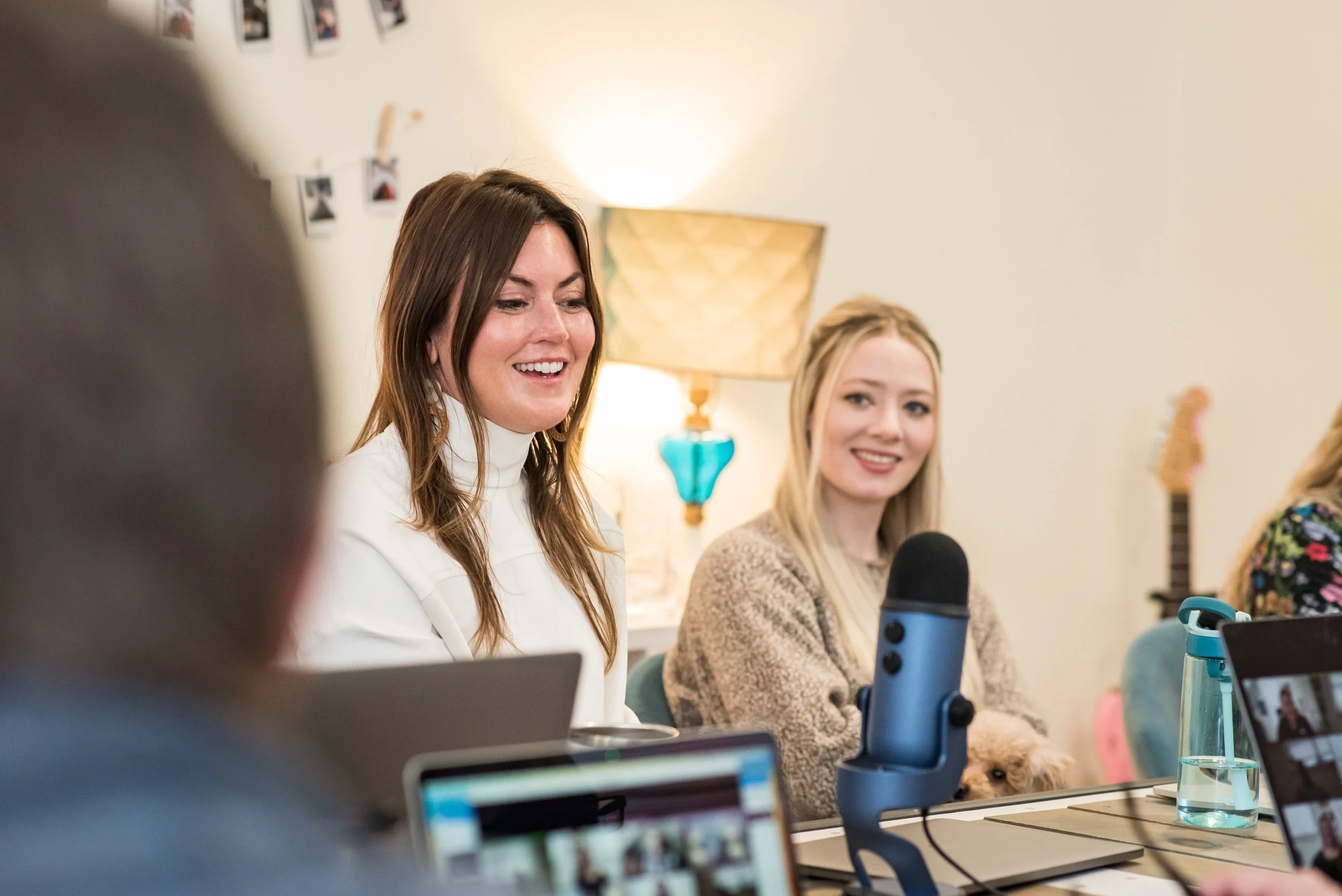
Becky McKinnell, founder of digital marketing agency iBec Creative and coastal-inspired handbag company Wildwood Oyster Co., was the 2025 Propel Ignition Award Entrepreneur of the Year. PHOTO: GARRICK HOFFMAN
Becky McKinnell, founder and chief executive officer of digital marketing firm iBec Creative, agrees.
“Yes, we can sponsor nonprofit events and make donations to nonprofits,” she says. “But we can have a bigger impact by helping amplify the work nonprofits are doing.”
iBec Creative formalized the company’s practice of providing free work for social justice and environmental nonprofits when they announced their Embrace Purpose Grants two years ago.
Eight recipient organizations—including Sebago Clean Waters, United Way of Southern Maine and Maine Coast Heritage Trust—have benefited from $40,000 worth of social media and website work.
“We try to help as many organizations as possible,” McKinnell says. “If they don’t win the grant, maybe we can do a consulting session to give them some ideas on how they move forward.”
About five years ago, iBec started calculating how much carbon they were using as a company—everything from their commutes to servers—and looked for ways to reduce that carbon.
“When we first started measuring our carbon footprint, all our servers were run through traditional electricity,” McKinnell says. “We were able to move to a wind powered servers with a company that plants trees for the number of sites hosted on the server.”
That evolved into pursuing B Corp certification in 2021.
“B Corp converted our values into a quantifiable measurement of how ‘good’ iBec is,” McKinnell says. “I could see how our nonprofit contribution lines up with other companies, how our health insurance coverage lines up with other companies, and how our governance operations align with other companies that care about being a certified force for good.”
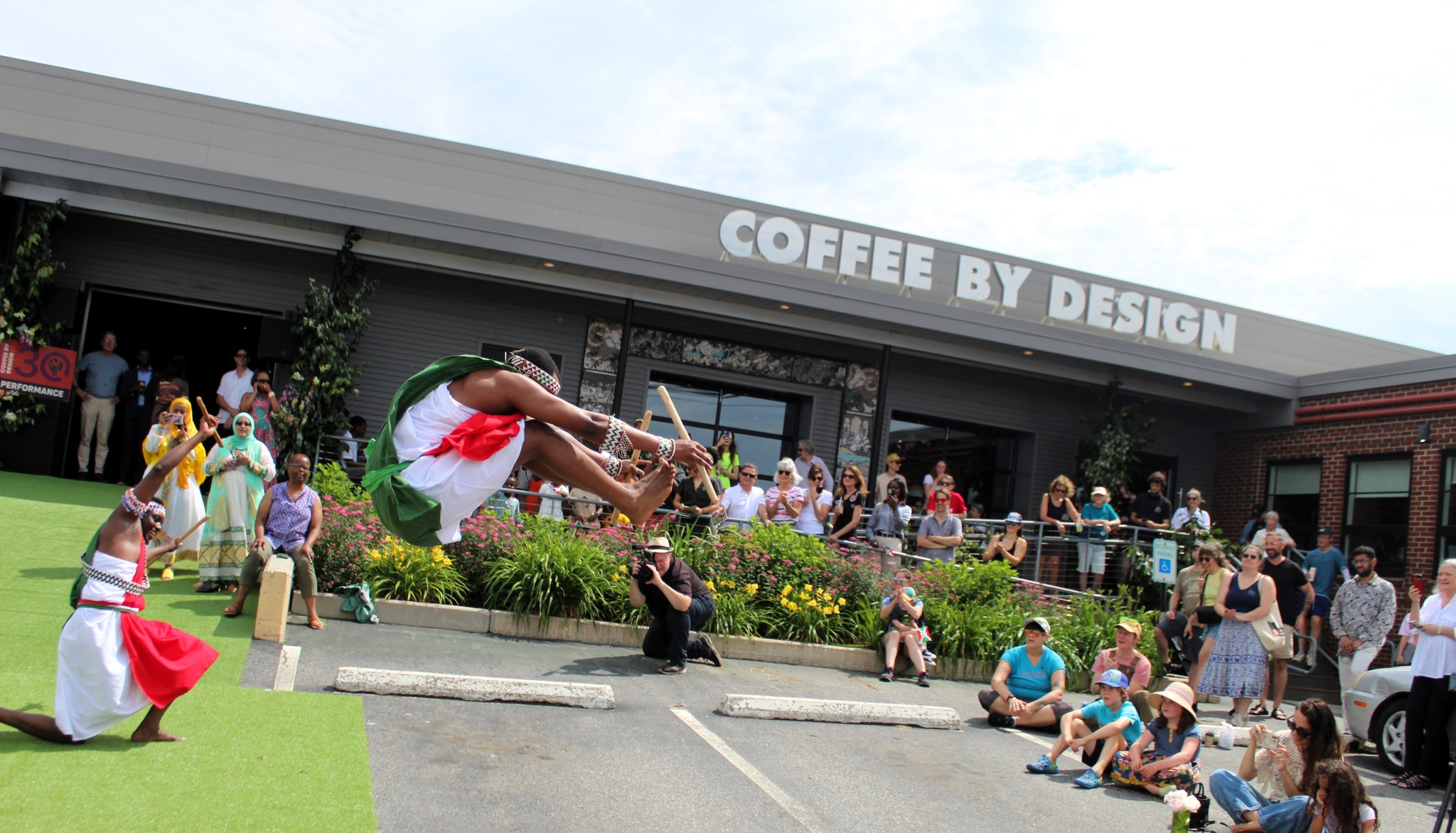
Coffee By Design’s 30th anniversary celebration in July 2024 included a performance by the Burundi drumming ensemble Batimbo United, a recipient of the Rebel Blend Fund grant. PHOTO: AMY PARADYSZ
Being a force for “good” involves a judgment call about what qualifies as good. For Portland-based Coffee By Design, that has always been a mix of investing in the local community—especially progressive arts and social change—and investing in their coffee farm partners around the world.
“Yes, we are a coffee company,” says owner Mary Allen Lindemann, who co-founded CBD in 1994. “But what I have learned is that coffee is our vehicle for doing impactful work that results in investment and sustainable change in our communities.”
And they do invest—in a big way. CBD has donated nearly $2 million between local initiatives and their global farm partner communities.
The Rebel Blend Fund alone has contributed more than $130,000 to Maine arts organizations, including a recovery focused podcast, Wabanaki artisans and Burundi drummers.
CBD also sponsors global arts performances through Portland Ovations and a monthly Portland Jazz Orchestra series at One Longfellow Square. CBD has commissioned murals of community leaders, including the late Alain Jean Claude Nahimana, co-founder and first Executive Director of the Greater Portland Immigrant Welcome Center. And, through the website Donors Choose, CBD contributes each month toward items Portland area teachers wish their students could have, from diversity-focused books to swimming lessons.
In addition to sponsoring dozens of nonprofit fundraisers, CBD hosts thought-provoking events in their roastery and coffee shop. Customers dropping by for a latte might experience an Ethiopian coffee ceremony, drag queens reading stories or a night market featuring Asian artists and entrepreneurs.
“Part of the mission of CBD is showcasing the diversity and sophistication that exists in Maine,” Lindemann says.
Having sourced coffee beans from farms in 22 nations over 31 years, CBD has developed longstanding relationships with coffee farmers in Africa, Asia and Central and South America.
“We ask what their biggest challenges are and how we might help them,” Lindemann says. In response, CBD has helped support a new school for the children of coffee farmers in Tanzania, enabled women workers in Burundi to get paid directly, contributed funds that provide healthcare and other services for coffee women in India, and paid an upfront percentage for Rwandan coffee to protect farm partners from excessively high borrowing rates.
“Small businesses lose sight of the fact that they can have a big impact,” Lindemann says. “But when we work together, each of us doing what we can, it does make a difference.”
Mission-driven small businesses like Coffee By Design, iBec Creative, Catalyst for Change, GoGo Refill, Garbage to Garden and MaineWorks make outsized impacts here in Maine and beyond. They also show us that small actions—like saving food scraps, wearing a “Keep going;” shirt, or buying coffee from a company that pours back into the community—add up to an incrementally better world.
What are B Corps?
B Corps are for-profit companies certified by the nonprofit B Lab to meet rigorous standards of social and environmental performance, accountability and transparency. Maine’s dozens of B Corps include Allagash Brewing Company, Cornerstone Financial Planning, Dental Lace, Energy Circle, Mexicali Blues, iBec Creative, MaineWorks, ReVision Energy and Wicked Joe.
1% for the Planet
Businesses in the 1% for the Planet network donate at least 1% of their annual sales to environmental organizations, promoting sustainability and accountability. Maine has dozens of 1% for the Planet companies, including Androscoggin Bank, Green & Healthy Maine, GoGo Refill, Symmetree, Great Works Internet (GWI) and Maine Beer Company.