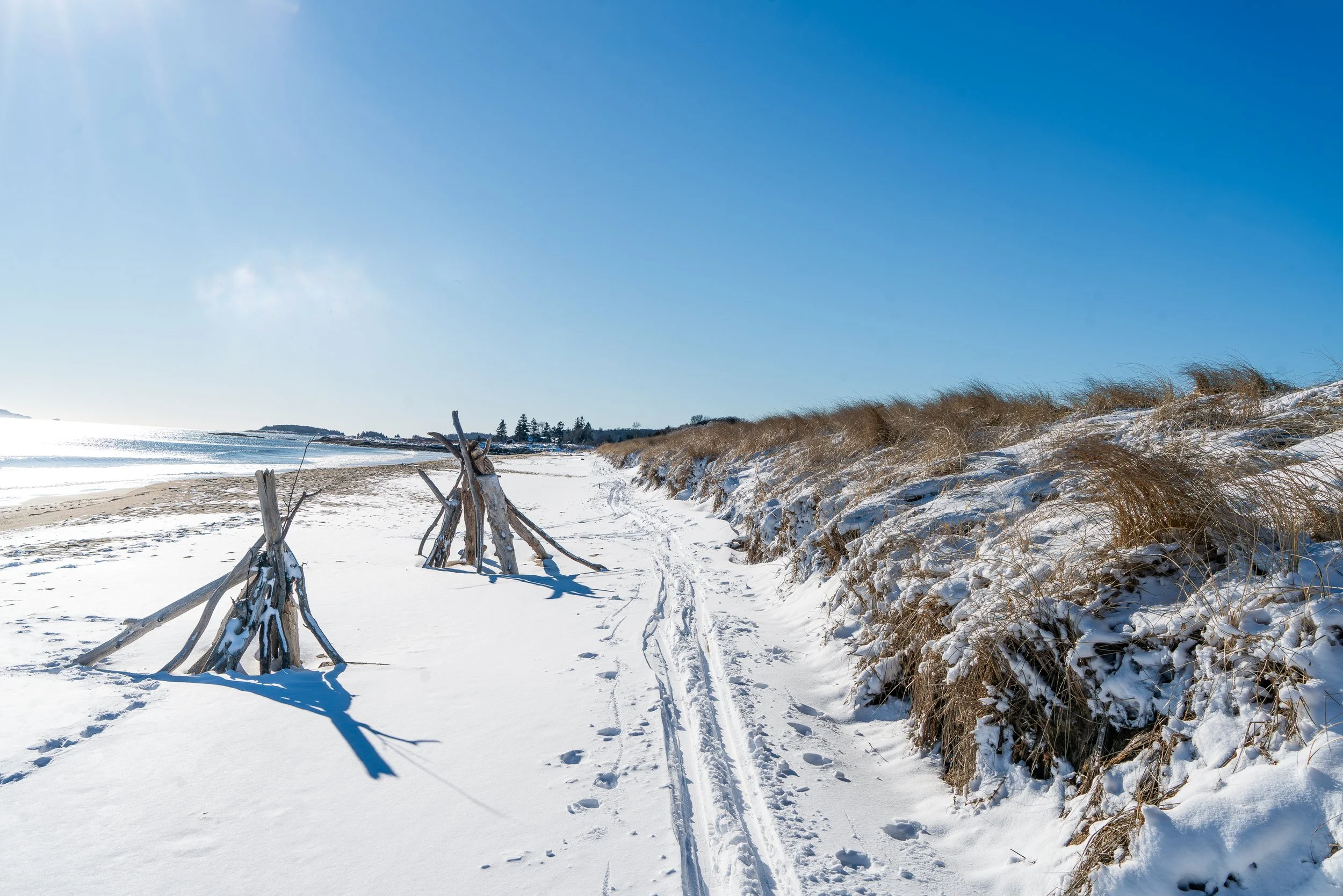
Cross-country skiers make tracks in fresh snow at Reid State Park. PHOTO: ELISE KLYSA
By Andrea Lani
One February, a friend and I took a trip to the beach. As we lay back in the sand, the sun warmed our faces and sparkled off the turquoise water. From nearby came the rhythms of a steel drum. Were we at a Caribbean resort? No. We were at Maine’s own Pemaquid Beach. The day was unseasonably warm, the dunes shielded us from offshore breezes, and the trees that bordered the cove were pines not palms. The steel drums were a happy coincidence.
Many of us pack up our beach umbrellas and swim towels around Labor Day and turn our outdoor pursuits inland toward foliage hikes and snow sports. Most years, we don’t haul the beach gear out again until the sun is high and Route 1 is crowded with traffic. But by avoiding Maine’s coast nine months out of the year, we miss out on much of the magic of living in a state with more than 3,000 miles of seashore.
A wintertime trip to the shore can offer unexpected surprises, like seeing an unusual duck, bonding with a shrimp-like creature in a tide pool or witnessing the northern lights. It’s also a great way to enjoy the beach while avoiding the crowds. If you’re not sure where to start with an off-season coastal visit, try one of these activities to take advantage of winter’s seaside wonders:
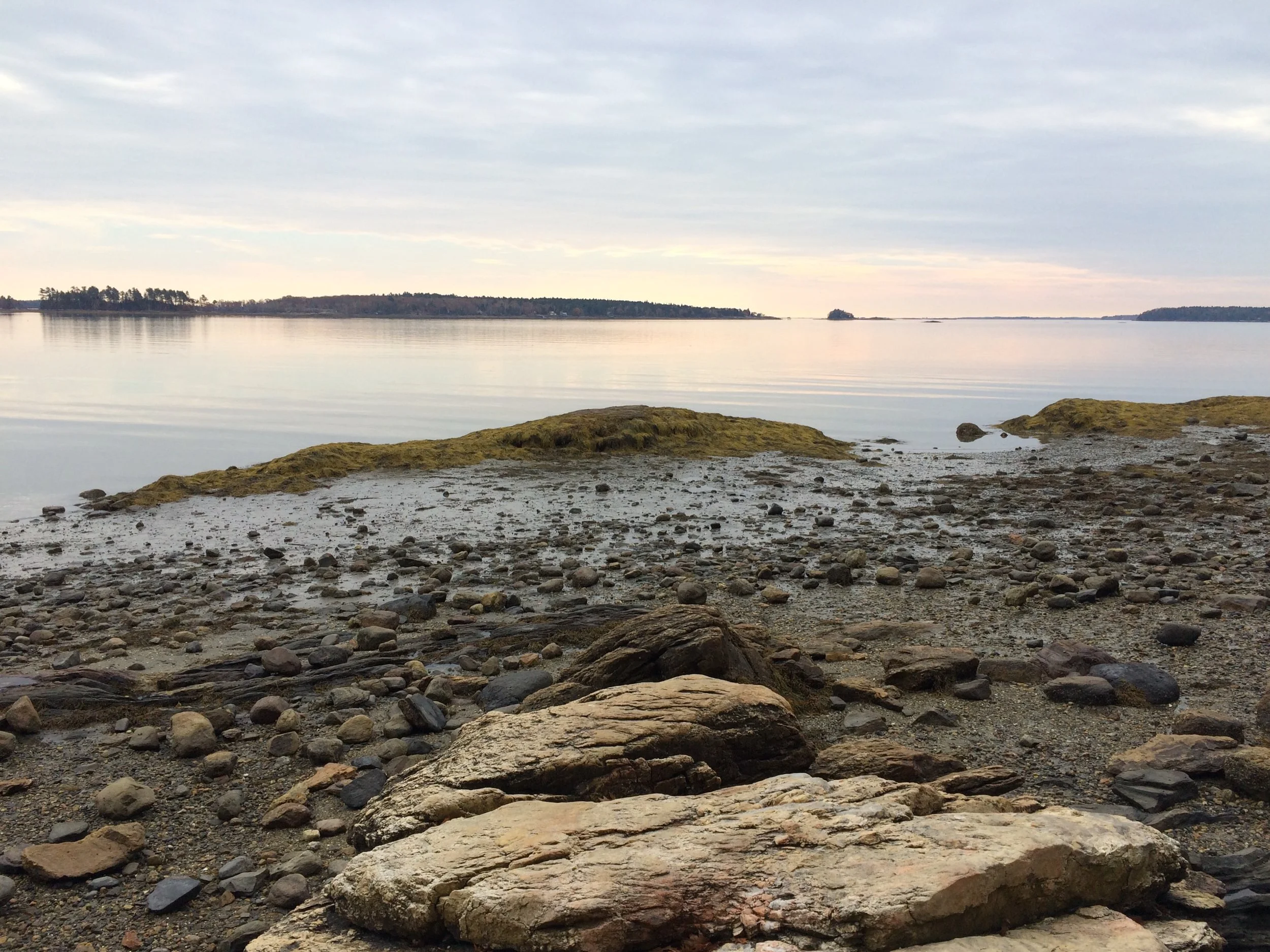
Wolfe’s Neck State Park in the off-season is a peaceful oasis. PHOTO: ANDREA LANI
EXPLORE THE SHORE
We can all use a boost in winter. As Les Watling, professor emeritus of marine science at University of Maine and University of Hawaii, says, “Beaches are therapeutic. On a clear, sunny day you can walk a long way on the beach while you think or have a conversation.”
A peaceful winter day at the beach offers a chance to slow down and pay attention to nature. You might notice that your favorite beach becomes narrower and steeper in wintertime. Watling explains that this seasonal reconfiguration is due to winter’s high energy-waves washing sand out to a bar offshore. Calmer waves in spring plow the sand back onto the beach in time for summer sunbathing.
The clear aqua color of the ocean this time of year is due to reduced levels of nutrients in the water, according to Watling. Over the winter, these nutrient levels begin to rise due to microbial decomposition of undersea life. The nutrients, in turn, feed beds of kelp and other seaweeds, causing them to grow luxuriant as daylight increases. When clumps of seaweed get tossed on shore by waves, the invertebrates like bryozoans, hydroids and bivalves that hitch a ride on them offer a fascinating peek into the underwater world. More mobile sea creatures can be observed in tide pools, which, due to their salinity, usually don’t freeze. Watling suggests winter shore visitors crouch quietly near a pool for a few minutes and wait for amphipods—small, leggy crustaceans—to come out of hiding.
SCAN THE SKIES
In our heavily forested state, the seashore is one of the best places to get an unobstructed view of the sky. With innumerable islands and peninsulas, it’s possible to see the sun rise and set over the water. For stargazers, the shore is also a great place to observe winter constellations, meteor showers and auroras. If after-dark beach trips aren’t your thing, try cloud collecting. Start with the basics of cumulus (fluffy cotton-ball clouds), stratus (low, blanketing clouds) and cirrus (high, wispy clouds), and photograph your sightings. The more you visit the coast, the more cloud types you’ll add to your collection. (More on cloud collecting: cloudappreciationsociety.org)
WATCH THE BIRDS

Buffleheads are among the many seabirds that can be seen from shore in wintertime, as shown here on Great Diamond Island. PHOTO: NICK LUND
After the warblers and swallows pack up and fly south, head to the shore to spot migratory birds. “There are a lot more species of waterfowl to see in winter than in summer,” says Nick Lund, advocacy and outreach manager at Maine Audubon and author of the American Birding Association Field Guide to Birds of Maine. When their breeding grounds on northern lakes freeze up, ducks and loons migrate to Maine’s coast, where the seas are relatively calm and food is plentiful. The most familiar of the ducks that congregate near the shore is the common eider. Common loons, another Maine favorite, are easier to see in the wintertime on saltwater than on their summer lakes, although their plumage becomes subdued. Other stunning species that can be viewed from shore in wintertime include black scoter, white-winged scoter, surf-scoter, long-tailed duck and harlequin duck.
Almost anywhere along Maine’s coast is good for winter seabird watching, says Lund, but rocky promontories and breakwaters make excellent viewing platforms, and certain species prefer specific conditions. For instance, the purple sandpiper, the only shorebird that winters in Maine, prefers exposed rocks where waves crash, and the bufflehead, a small black duck with a big white head, favors the shallow waters of bays and inlets. Lund notes that binoculars are adequate for observing ducks offshore, but a spotting scope can give birders a better view and is essential (along with patience) for spying alcids like razorbills and dovekies.
For a unique winter birding experience, hop on any of Maine’s island ferries, or take a trip on the Casco Bay Mail Boat (cascobaylines.com). From the deck, you’ll have a good chance to view many of Maine’s winter ducks. Lund notes that sightings of pelagic birds like the northern fulmar and black-legged kittiwake are possible from ferries to more distant islands like Monhegan.
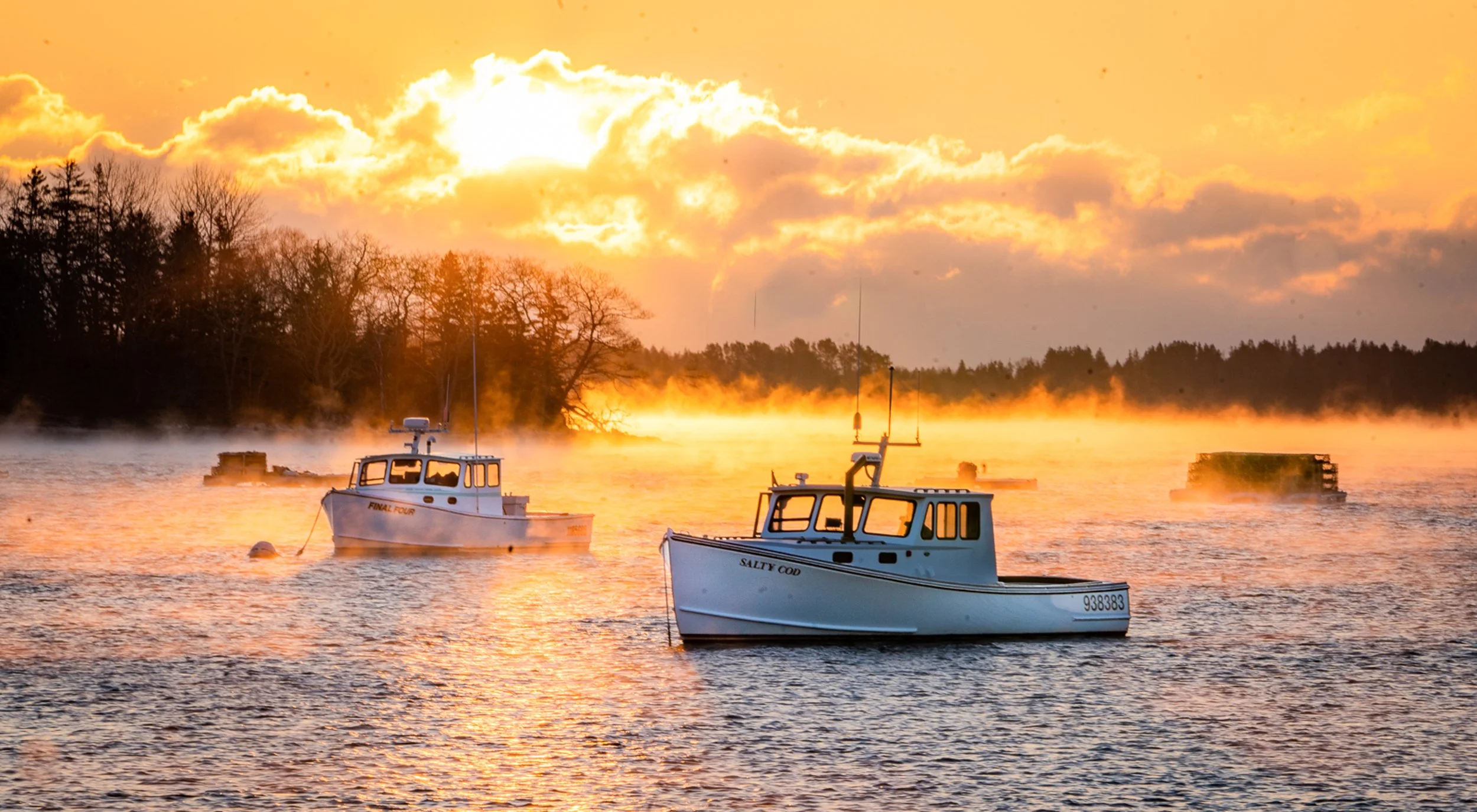
Lobster boats rest amid the morning mist in Rockland. PHOTO: ELISE KLYSA
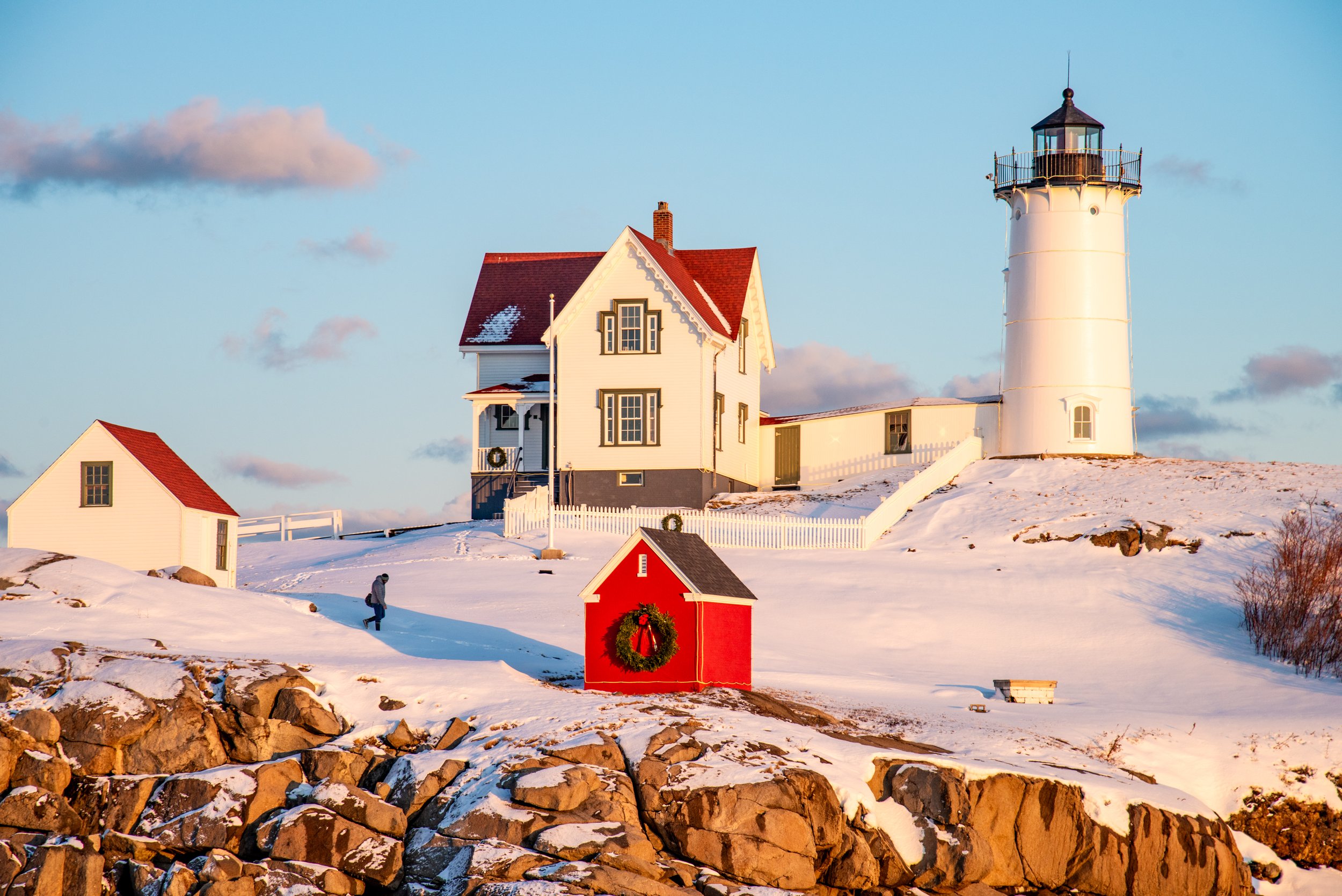
A winter walker explores the grounds at Nubble Lighthouse on a crisp winter morning. PHOTO: ELISE KLYSA
TAKE A HIKE
When mountain trails are icy and treacherous, consider trekking along a coastal route. Trails that you might avoid in summer because of greenheads, or because you’d rather lie on the beach, make for ideal winter hikes. Most of Maine’s coastal state parks have trail networks that meander through salt marshes and other seaside habitats, and a few, such as Hollbrook Island, Two Lights and Reid, offer guided or self-guided First Day Hikes on January 1 (maine.gov/dacf/parks). In Acadia National Park, explore winter’s wonders on the Ship Harbor Trail or walk the Ocean Path from Sand Beach to Thunder Hole. Wherever you find yourself along Maine’s coast, there’s likely a land trust property or nature preserve nearby where you can hike along a rocky shoreline or make your way to a pebble beach. Check the local land trust’s website or use Maine Trail Finder (mainetrailfinder.com) to discover shoreside trails.
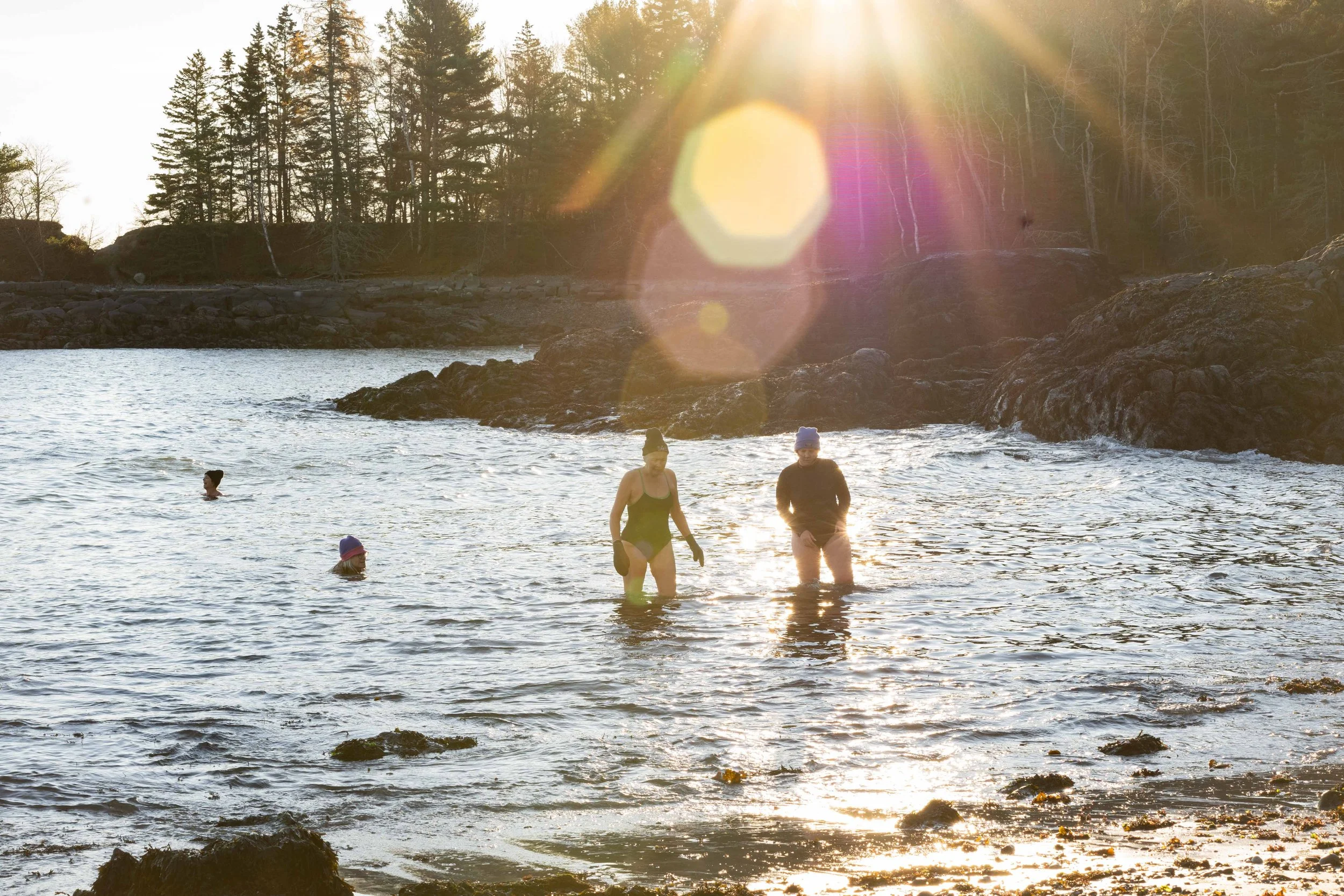
Cold dippers brave Maine’s winter waters at Compass Harbor on Mount Desert Island. PHOTO: GINNY MAJKA
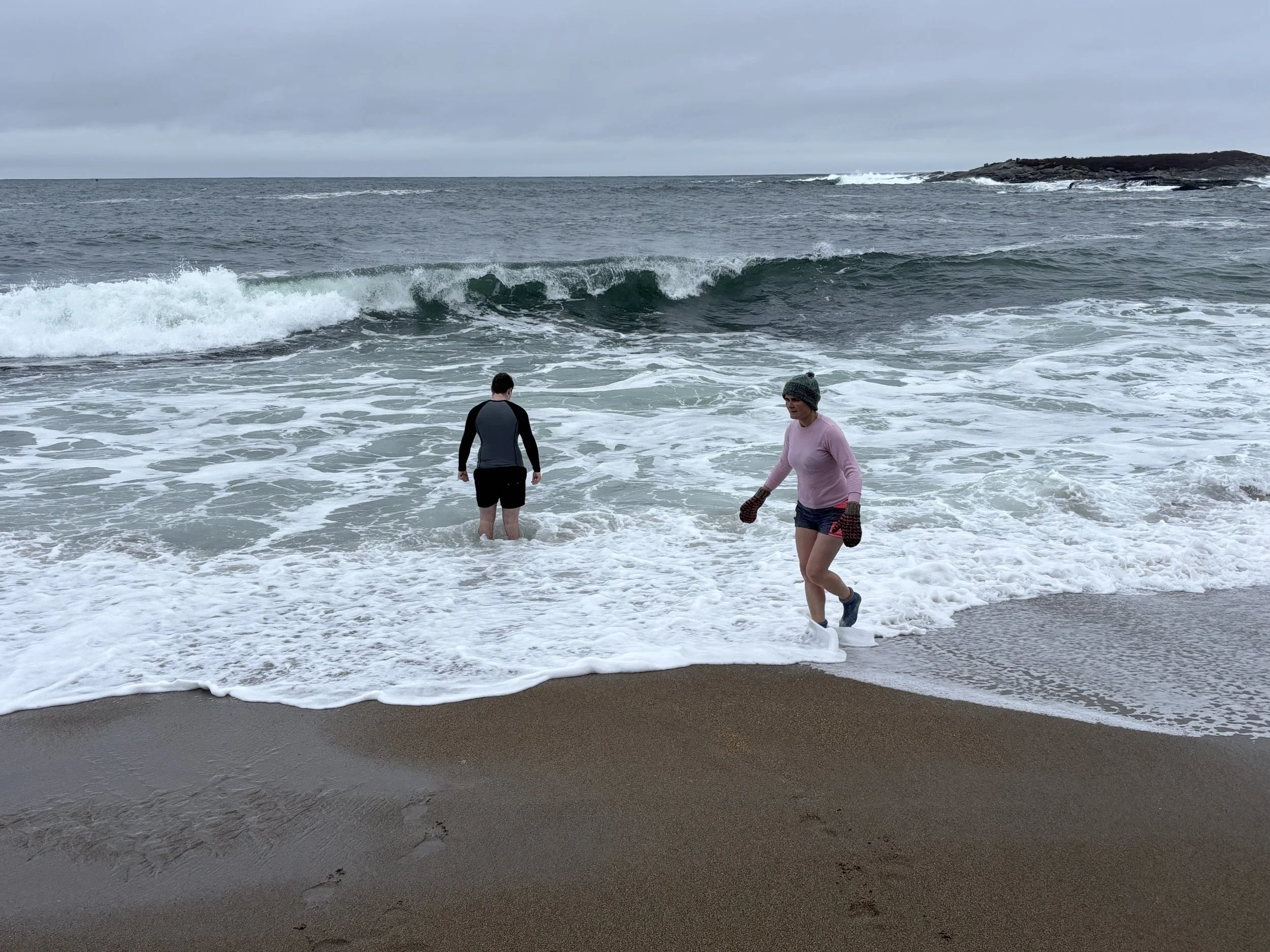
New Year’s Day cold dippers enjoy the waves at Reid State Park. PHOTO: KAREN FOUST
GO FOR A DIP
The most diehard wintertime coast-goers don’t stop at the shore but splash into the water. Several groups around Maine organize regular cold-water swimming meet ups, with options for a quick plunge or a longer dip. A few such groups include Two Maine Mermaids in Southern Maine (twomainemermaids.com), Wicked Nippy Dippahs in the Midcoast (instagram.com/wickednippydippahs) and Cold Tits, Warm Hearts on Mount Desert Island (coldtitswarmhearts.com). Karen Foust of West Gardiner, who dips monthly at various beaches with a small, informal group from the capital area, enjoys cold dipping for the sense of community as well as the connection to the earth. “There’s something very grounding about being in the ocean in winter,” she says. “When you get into the water, you’re aware of every inch of your body, and you let go of everything else. It’s very freeing.”
If you want to combine your cold plunge with a 5K while helping raise funds for climate advocacy, consider participating in the Natural Resources Council of Maine’s annual Polar Bear Dip & Dash. The 2026 event is at Willard Beach on January 4 (nrcm.org/events).
OBSERVE SEAL PUPS
When low temperatures or snowstorms make a trip to the shore unadvisable, why not sip hot cocoa while watching a livestream of baby seals lolling in the snow? Beginning in late December, gray seals come ashore to give birth and mate on Seal Island, 22 miles off the coast of Rockland. Stores of blubber and warm fur coats make the seals impervious to frigid temperatures. After a few weeks on shore, the females mate and return to the water, but the pups remain on the island until late January or early February. Via live webcam, you can watch the babies nap, nurse and scramble around like fluffy water balloons (explore.org/livecams/oceans/seal-pups-cam).
Wherever your winter coastal adventures take you, a few precautions will keep you safe and comfortable.
Travel with a buddy, leave yourself plenty of time to explore before dark, check the tides so you don’t get stranded, dress in warm layers, and take along a pair of ice spikes in case of slippery terrain. Cold water dipping requires extra safety measures, such as neoprene booties and mitts, as well as warm clothes and a hot beverage for après-swim. An open mind and a spirit of adventure are the only other necessary gear for a winter trip to the shore.