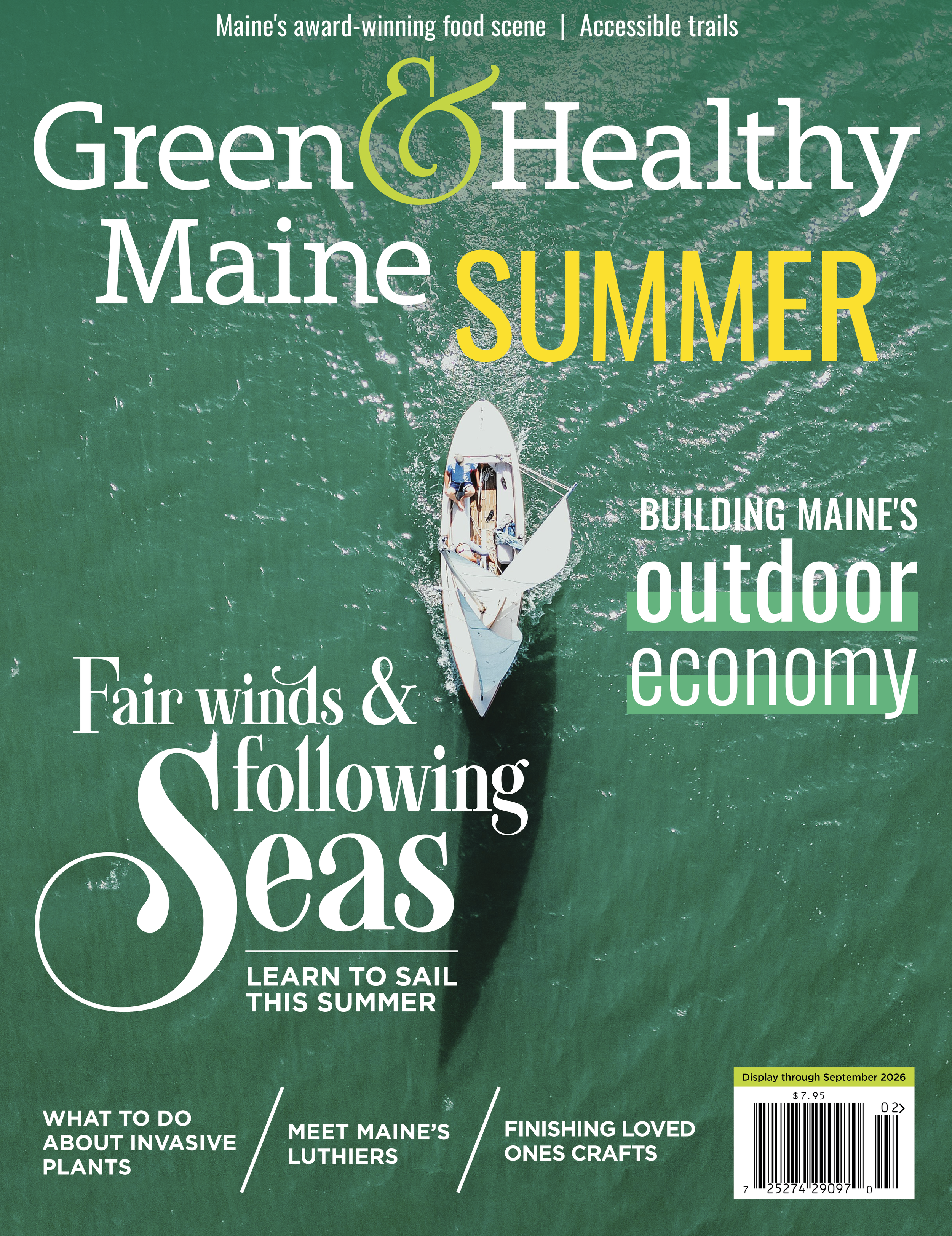
Fair winds & following seas
Learn to sail on the Maine coast this summer
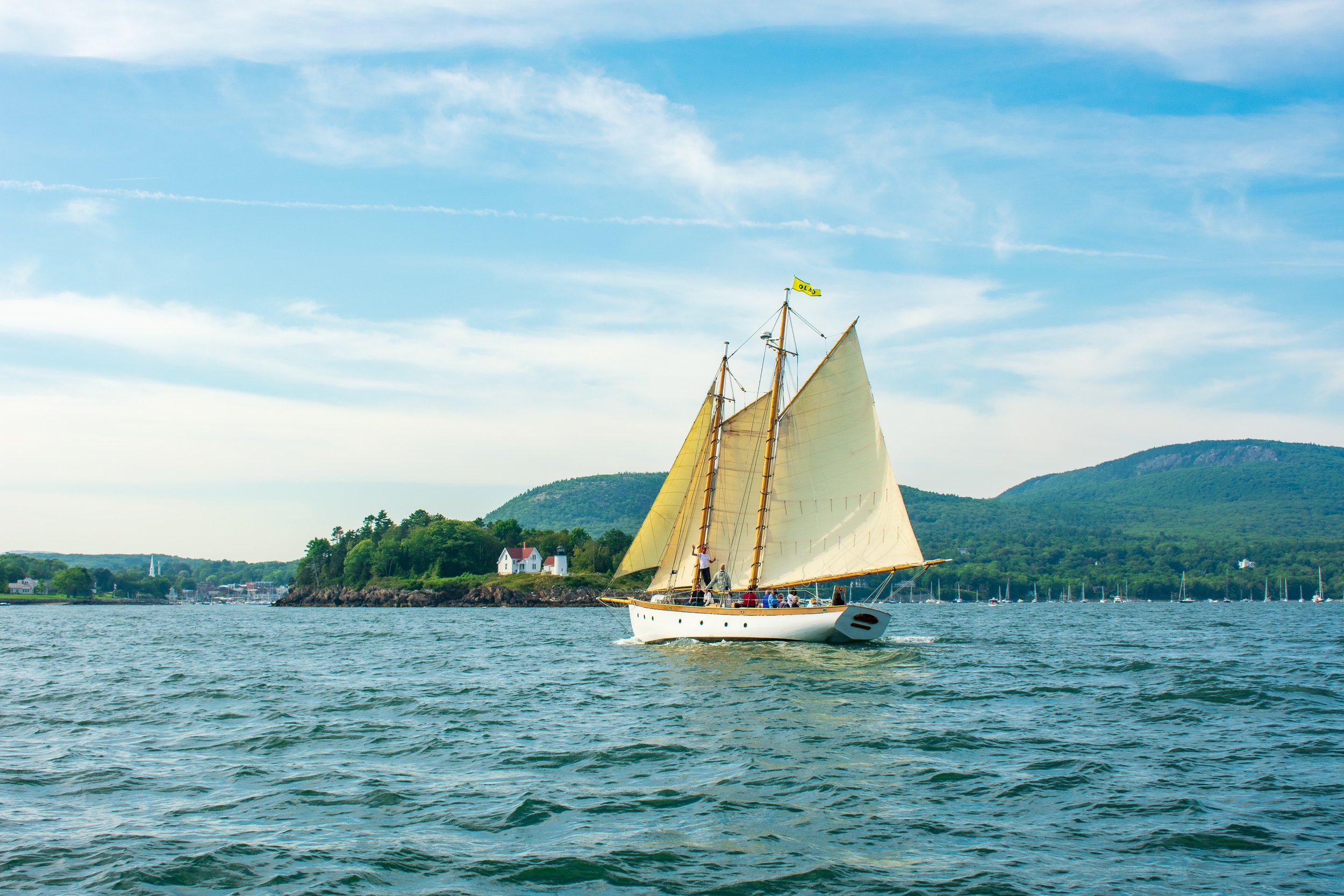
The Schooner Olad sails past Curtis Island lighthouse outside Camden. COURTESY PHOTO
By Saisie Moore
FROM THE OUTSIDE, the world of sailing appears complex and inscrutable. Just watch a sailboat crew in action—responding to the invisible forces of wind and tides while shouting commands peppered with jargon like port, starboard, tack, jibe—and it can feel like witnessing a strange culture with a secret language. But dip a toe, and you’ll discover a community of enthusiasts willing to share knowledge and a spot on deck with eager beginners.
You may be thinking, “Surely I need my own boat?” Not necessarily. A host of organizations from Downeast to southern Maine can show you the ropes on a fleet of accessible, easy-to-handle crafts for sailors of all ages. The state’s famously scattered coastline harbors dozens of sheltered bays and quiet coves protected from the open sweep of the Atlantic, a welcoming environment for learning the basics.
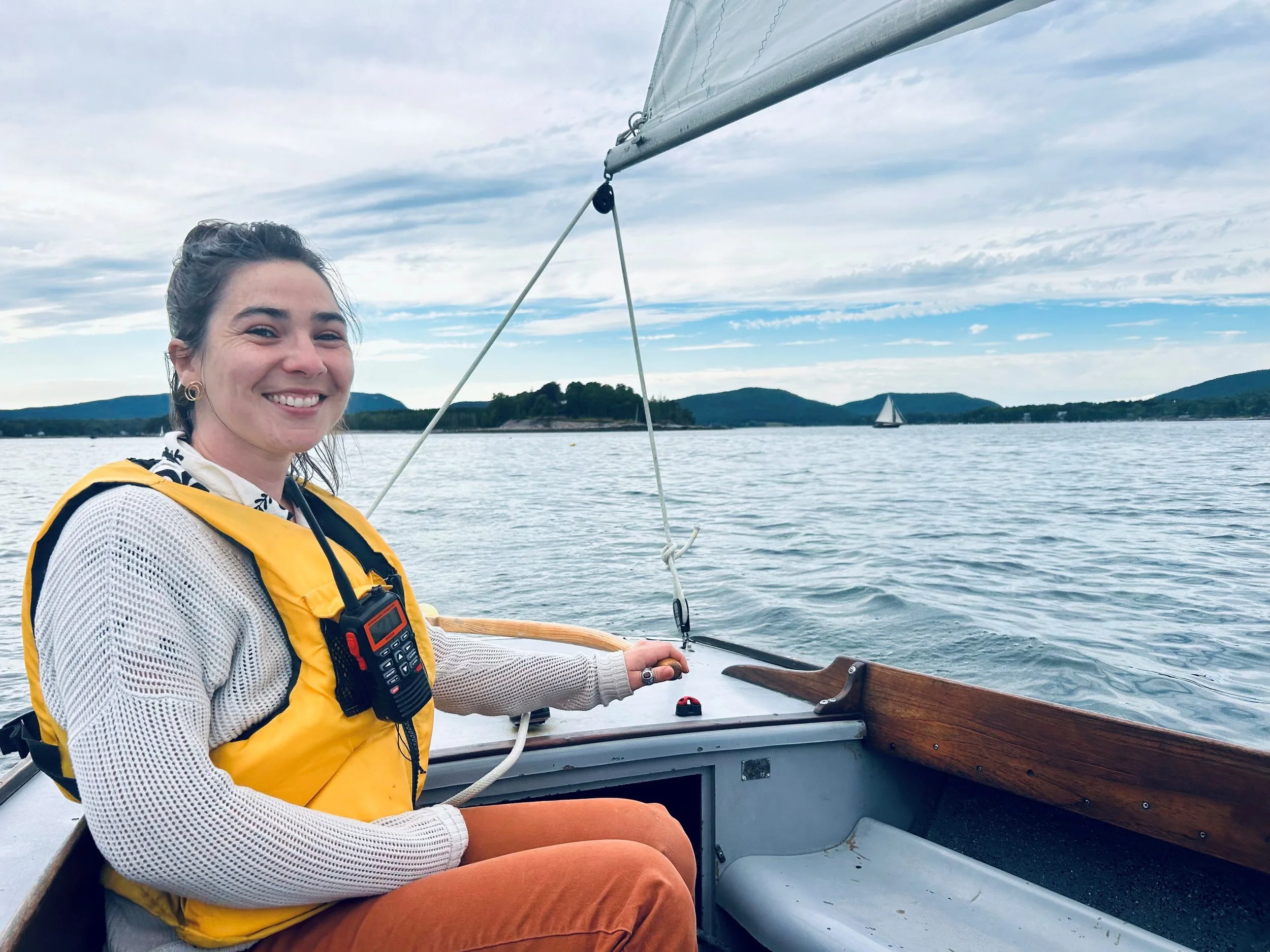
Regina Smith learned to sail with the MDI Community Sailing School. COURTESY PHOTOS.
After relocating to Orono from Portland, Regina Smith was sorely missing the Maine coast. For the holidays, her partner gifted a season of sailing classes at the MDI Community Sailing School to help her reconnect. Smith had dabbled with lessons as a child in Wayne.
“My dad sailed for fun, and I inherited his two-person Snark sailboat, which was great for getting myself acclimated with the basics of sailing,” she says. But, as much as she’d always been drawn to the ocean, sailing there seemed too intimidating—the tides, weather changes, and the vastness of the ocean. That changed over the course of the 2025 season, as Smith came to grips with the art of ocean sailing in Southwest Harbor. “Learning to read the wind and feel the transfer of energy to the boat was the most helpful for keeping me comfortable,” she says. “My sailing partner pushed me to get comfortable with ‘heeling,’ where the boat is leaning to one side and picking up speed. That was probably the most nervewracking skill to hone, but any sailor would tell you it’s the most fun part, too! My best moments came once I was able to relax and trust the boat and my skills.”
Maine’s marine weather is famously fickle, and sea fog is a common challenge. Always dress for inclement weather, with non-marking, rubber-soled shoes designed for slippery decks. Access to personal floatation devices is required by law.
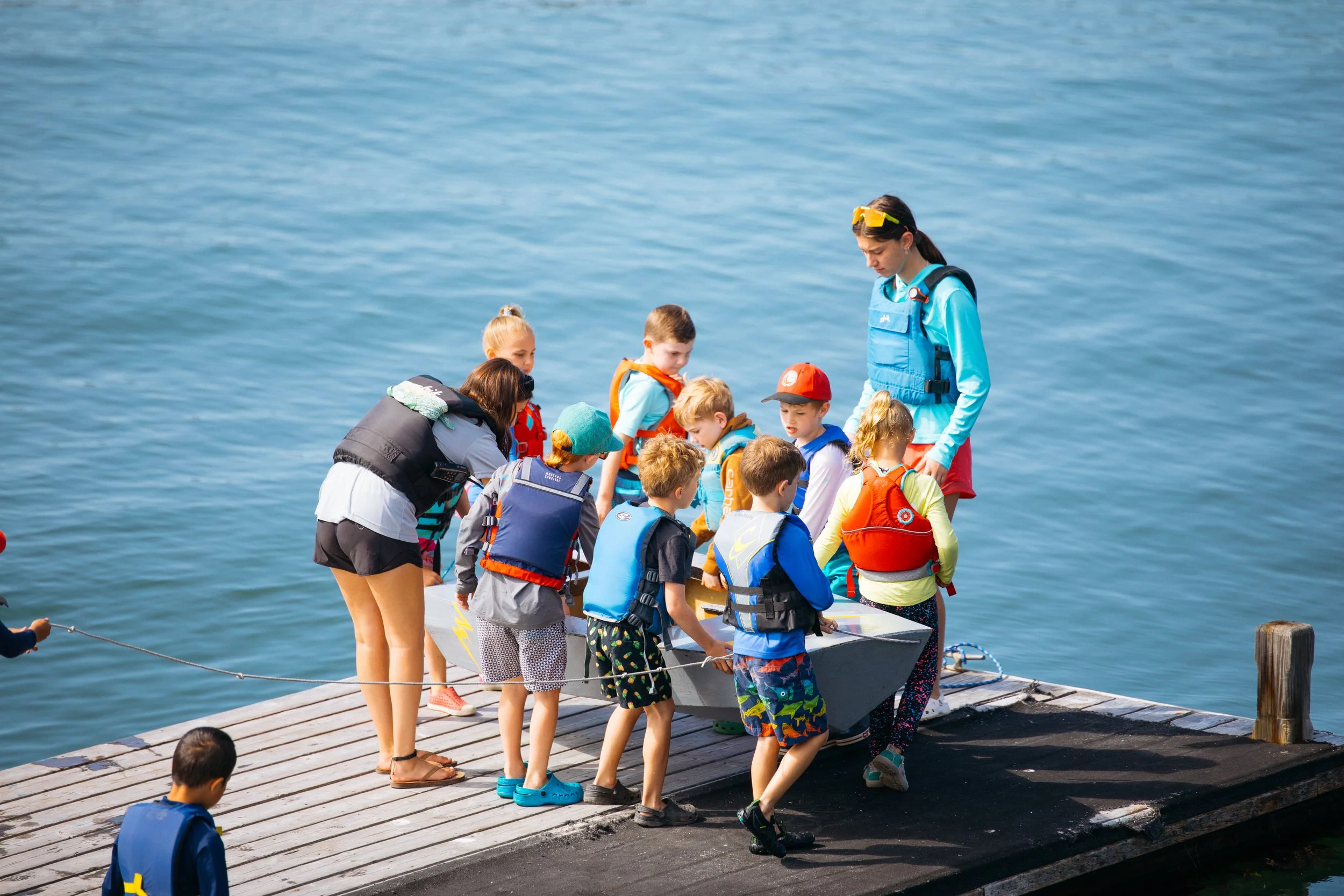
A varied fleet of vessels enables SailMaine to cater to every student and skill level. The reliable Cape Cod Frosty rewards kids as young as five with the confidence to handle a boat independently. COURTESY PHOTOS.
SailMaine, Portland
SailMaine’s fleet of sailboats is a familiar sight on Portland Harbor, where for 30 years the nonprofit has promoted personal growth through accessible and affordable sailing opportunities. They welcome more than 1,000 student sailors each year. A range of youth programs operate throughout the summer in one- to two-week blocks, offering hands-on youth instruction, from absolute beginners to college-level athletes.
Adult instruction runs from May through the fall with options for private or group classes throughout the day. Accompanied by an experienced instructor (and up to three fellow students), you’ll learn how to skipper a boat safely aboard SailMaine’s fleet of J22 model sailboats. Learners can take comfort in the knowledge that the J22 is designed with a fixed “keel”—a kind of sturdy backbone designed for extra stability—and is difficult to tip over. Lessons take place throughout the day, offering ample opportunities to explore and observe the city skyline, surrounding islands, and cruise past Fort Gorges—all within the sheltered confines of Casco Bay.
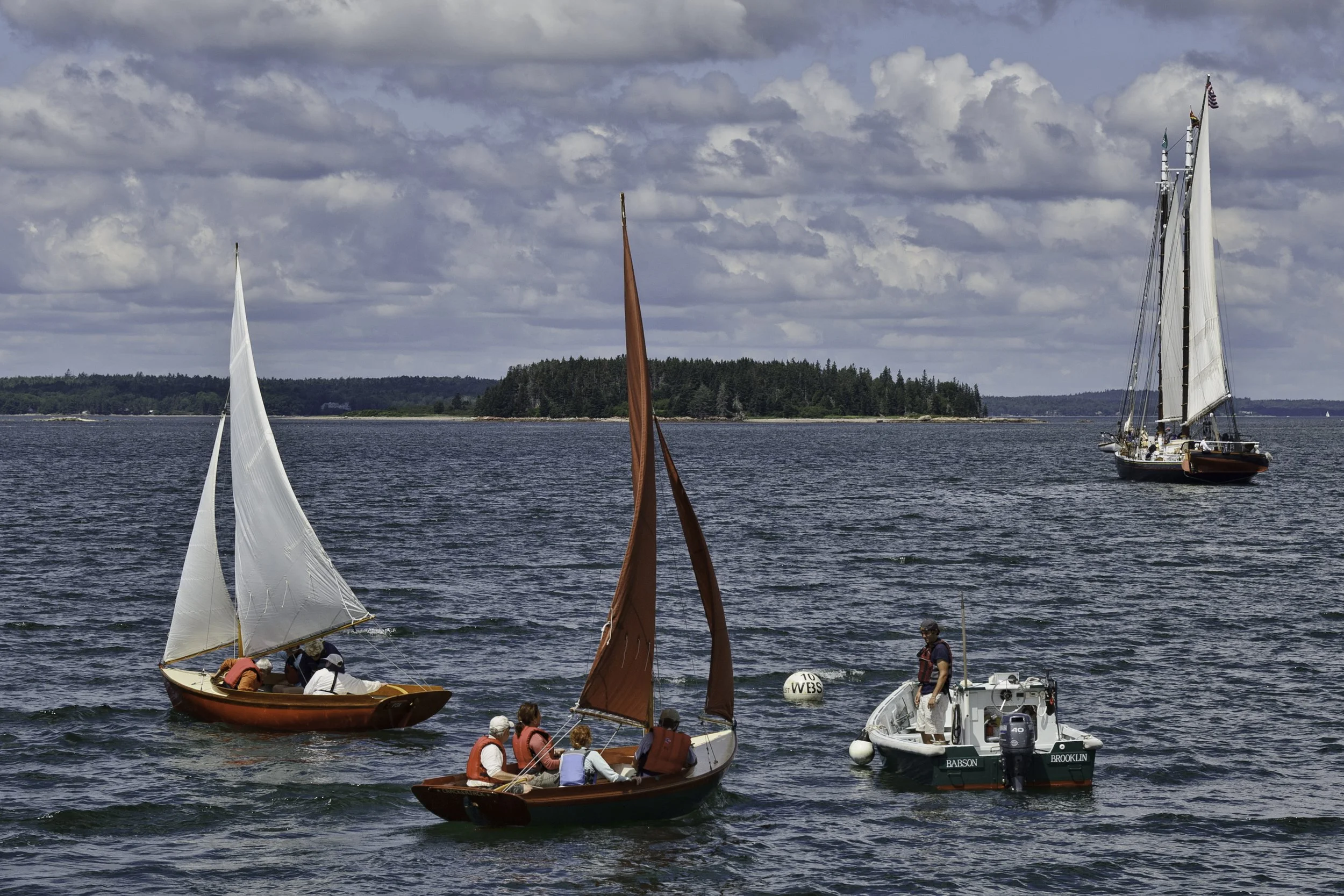
Students receive instruction aboard two classic sloops hand-built onsite at the WoodenBoat School’s famous workshop. COURTESY PHOTO
The WoodenBoat School, Brooklin
At the eastern foot of the Blue Hill Peninsula, Brooklin’s WoodenBoat School has been a fixture of the boatbuilding community since 1981. Situated beside the Eggemoggin Reach, a 10-mile waterway bordered by Deer Isle that boasts a reputation for world-class sailing, the school attracts sailors and shipwrights from far and wide.
From June through August, the Element of Sailing program offers entry-level instruction to adults aboard classic wooden vessels (made onsite, naturally). Two Herreshoff and Haven sloops (a single-mast boat with two sails) make up the beginner sailing fleet. These sturdy daysailers form an on-thewater classroom. The school prides itself on teaching not just sailing, but seamanship—the art of reading and responding to the ocean. Lessons extend into navigation and chart reading, knot tying and heavyweather strategy from “sea-wise” teachers. Further courses include advanced sailing instruction, coastal navigation, and five-day voyages aboard a fleet of “catboats,” a versatile New England favorite.
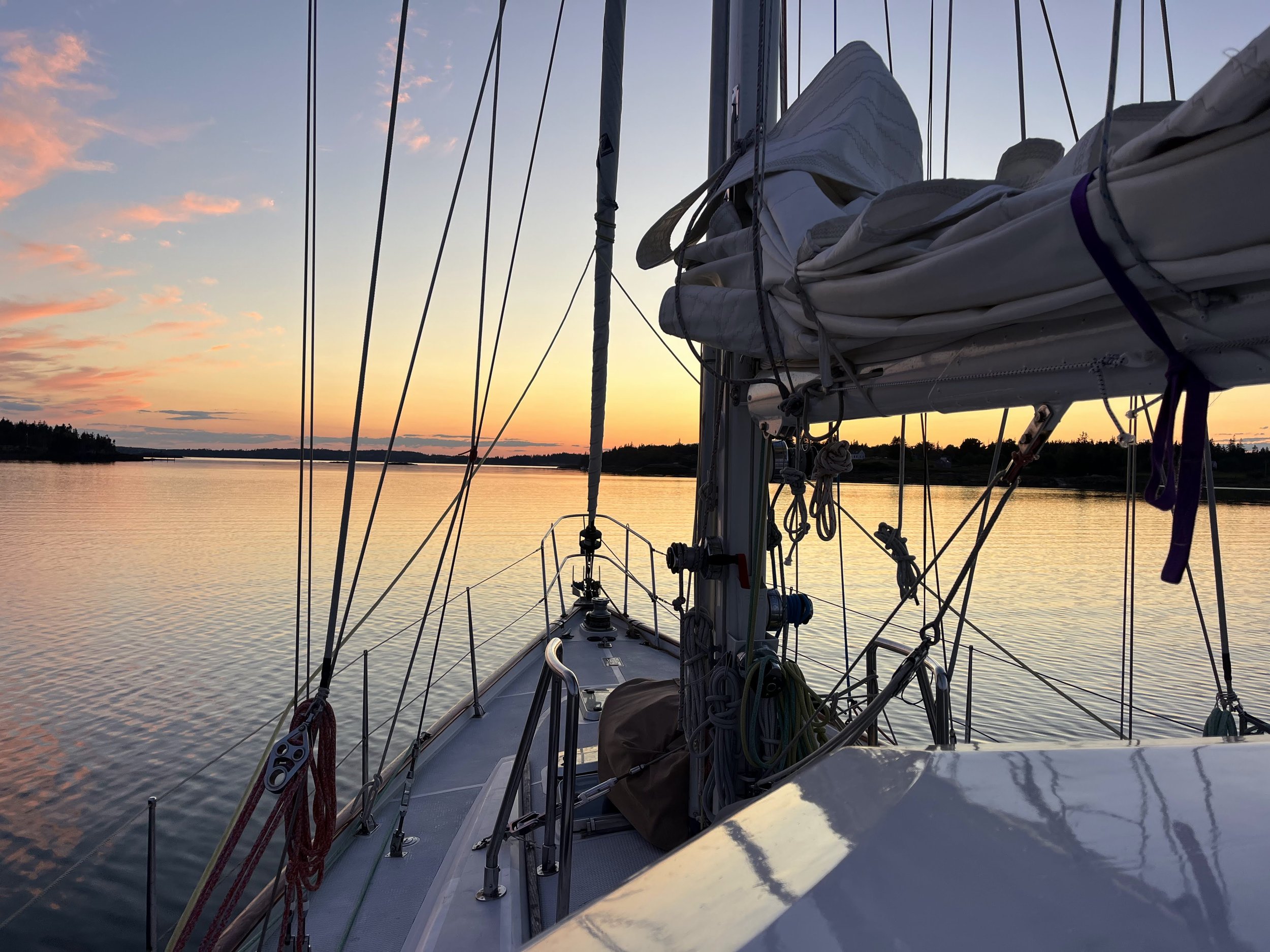
Students will spend multiple days aboard the Rocinante training vessel, where they learn a spectrum of hands-on seamanship skills, including navigation and night sailing. COURTESY PHOTOS
Morse Alpha, Rockland
Eager to take your seamanship to the next level? Morse Alpha in Rockland hosts intensive coastal and offshore sailing courses for motivated students to gain rigorous, hands-on experience. Far from bobbing around the bay, students take part in a five-day liveaboard expedition along the coast of Maine (and beyond), led by maritime professionals and licensed captains with years of sailing experience. During the Maine expeditions, the crew will cruise the waters of Penobscot Bay, learning and living aboard Morse Alpha’s elegant 45-foot training vessel, the Rocinante. Over the course of each six- to seven-day excursion, students will experience everything the challenging, rocky coast of Maine has to offer, including an overnight voyage.
Morse Alpha welcomes sailors of every stripe, from beginners to confident skippers, for a deep education in recreational yachting informed by “sail theory, weather, electronics, voyage planning, engines, traditional navigation, emergency drills, VHF protocol, RADAR, anchoring, and more.” Drilled in commercial vessel protocols, students complete their expedition with a wealth of maritime knowledge to keep them afloat.
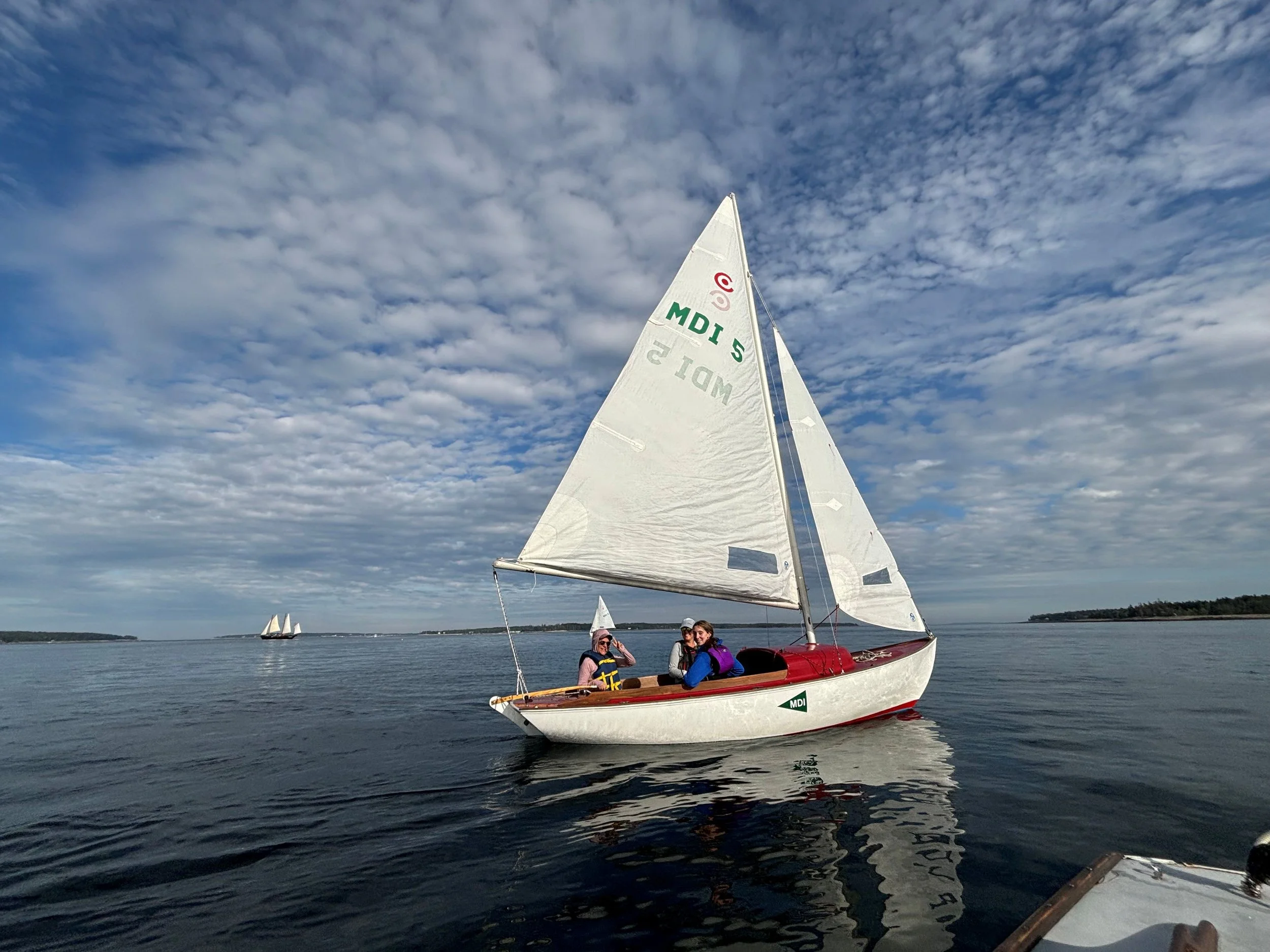
Southwest Harbor provides a beautiful backdrop for beginners to learn the ropes at MDI Community Sailing School. PHOTO: REGINA SMITH
MDI Community Sailing School, Mount Desert Island
For many, the barrier to entry into sailing lies in its high costs. Ripe with jokes about “pouring money into holes in the water,” boat ownership is an expensive and, for most, impractical endeavor. On Mount Desert Island, one of Maine’s most popular exclusive destinations, MDI Community Sailing School is boosting accessibility to the sport through community-focused programming and boat usage memberships. Students set sail from sparkling Southwest Harbor on a variety of keelboats and dinghy models, tailed by a support team of instructors in “chase boats.”
Seafaring juniors of all levels can take part in the school’s summer sailing programs, from beginner group classes in the morning (when winds are typically lower) to team racing. For adults, beginner courses are designed to offer a crash course in essential sailing skills over six sessions. Available for co-ed and women-only groups, these classes provide hands-on instruction on practical matters, from rigging and steering to knots and overboard drills. By the end of the program, students should finish the program able to solo skipper a Cape Cod Bullseye and will have the option to sign up for a Boat Usage Membership, providing access to the school’s fleet of sailboats and infinite adventure for a flat season fee.
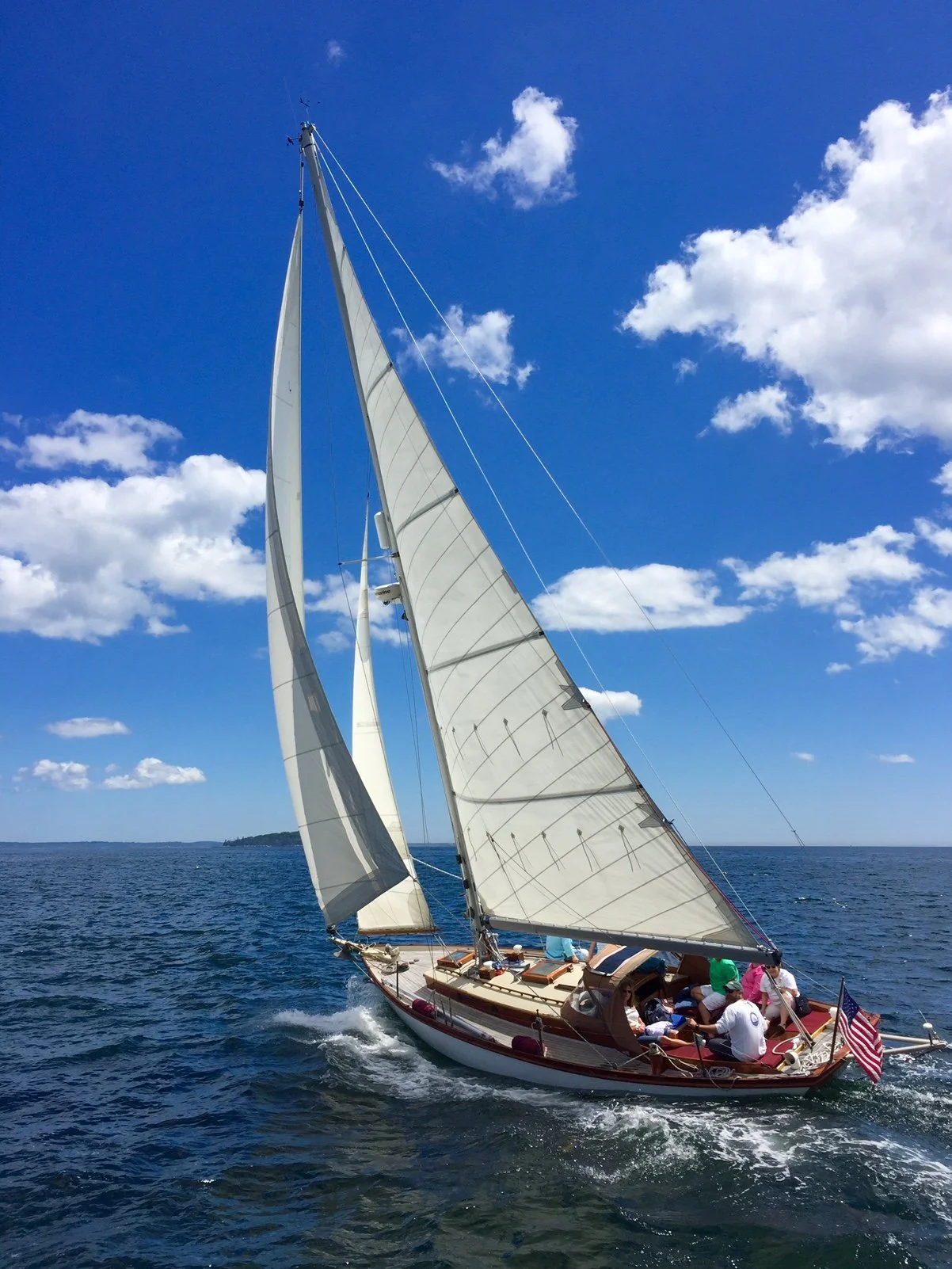
Cutter Owl in Penobscot Bay. COURTESY PHOTOS
Pleasure Cruises
Prefer the passenger lifestyle? Discover scenic cruises along the Maine coast this season.
Portland Schooner Co., Portland
Maine Windhammer Fleet, Rockland